What To Eat In Naples: Every Classic Dish, What It Costs, Where It Is Best
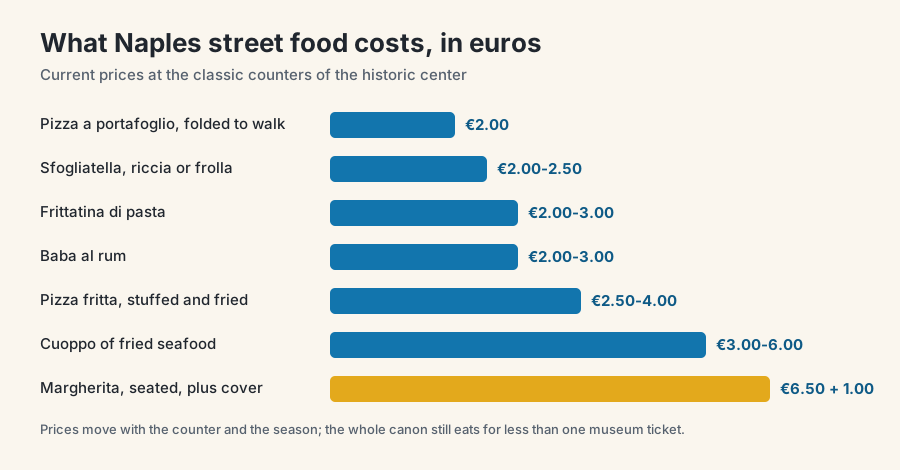
A folded pizza from a street window costs about €2 here. A seated margherita in the most famous rooms in the city runs about €6.50. Almost nothing on the classic list breaks €7, and that single fact changes how you plan a day of eating in Naples.
Short answer
Start with pizza: a seated margherita runs about €6.50 plus a €1 cover at the famous rooms, while a folded pizza a portafoglio is about €2 from a street window. Then cuoppo of fried seafood at €3 to €6, pizza fritta €2.50 to €4, sfogliatella riccia €2 to €2.50, babà €2 to €3 and frittatina €2 to €3. A full walking circuit eats well on €12 to €15.
Keep the independent food plan below, or add a guided experience for the food, place or technique that interests you most.
Booking choice: Taste fried pizza, mozzarella and Neapolitan pastries while an English-speaking guide connects the old streets. Explore Historic Centre Street Food Walk
What Is A Must Eat In Naples?
The three non-negotiables are a wood-fired margherita eaten seated, a pizza a portafoglio folded into quarters and eaten walking, and a sfogliatella riccia still warm from the tray. Add a cuoppo of fried seafood and you have covered the four things Naples does better than anywhere else in Italy.
Ask ten people who live here and the list barely moves. Pizza comes first, in one form or another. After that the argument is about running order rather than content: whether the fried stuff comes before or after the pastry, whether you eat standing at a counter on Via dei Tribunali or sit down and hand the afternoon over to it.
The prices below are what people actually pay at the high-turnover spots in the historic center. They matter more than they look. A €2 ceiling on the walking food means you can eat six different things in an afternoon and still spend less on food than a mid-range day costs in Rome or Florence, which is the practical reason Naples has become a food destination rather than a stopover on the way to Pompeii.
| Dish | Typical price | How it is eaten | Best time of day |
|---|---|---|---|
| Pizza margherita, seated | about €6.50 plus €1 cover | at a table, folded or with a knife and fork | lunch or early dinner |
| Pizza a portafoglio | about €2 | folded in quarters, in paper, walking | late morning |
| Pizza fritta | €2.50 to €4 | straight out of the fryer, standing | late morning to early evening |
| Cuoppo, seafood or vegetable | €3 to €6 | paper cone, one hand, walking | afternoon |
| Sfogliatella riccia | €2 to €2.50 | standing at the counter | breakfast, or whenever a fresh tray lands |
| Sfogliatella frolla | €1.50 to €2 | standing at the counter | breakfast |
| Babà al rum | €2 to €3 | on a plate at the counter, or boxed | after lunch |
| Frittatina di pasta | €2 to €3 | one hand, standing | mid-afternoon |
| Taralli 'nzogna e pepe | sold by weight at the counter | bagged, walking | early evening on the seafront |
| Mozzarella di bufala DOP | priced by the kilo at a deli counter | on a plate, or torn out of the bag | as early in the day as possible |
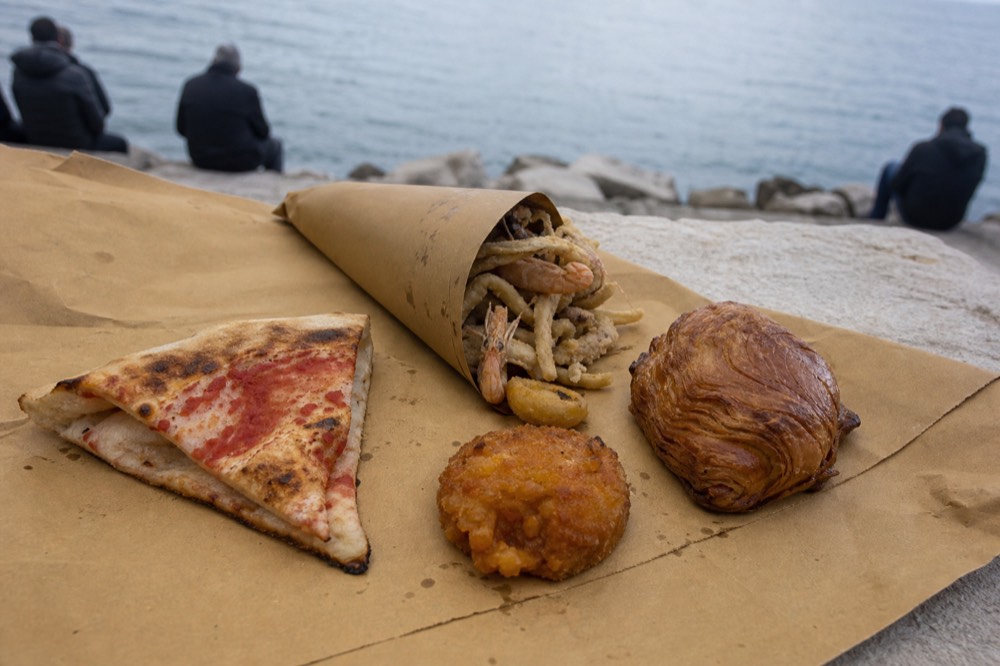
Two of those items reward planning and the rest do not. Sfogliatella is a timing question, because the difference between one that came out ten minutes ago and one that has sat under glass since eight in the morning is enormous. Seated pizza is a queue question. Everything else you can walk into.
What Is The Signature Dish Of Naples?
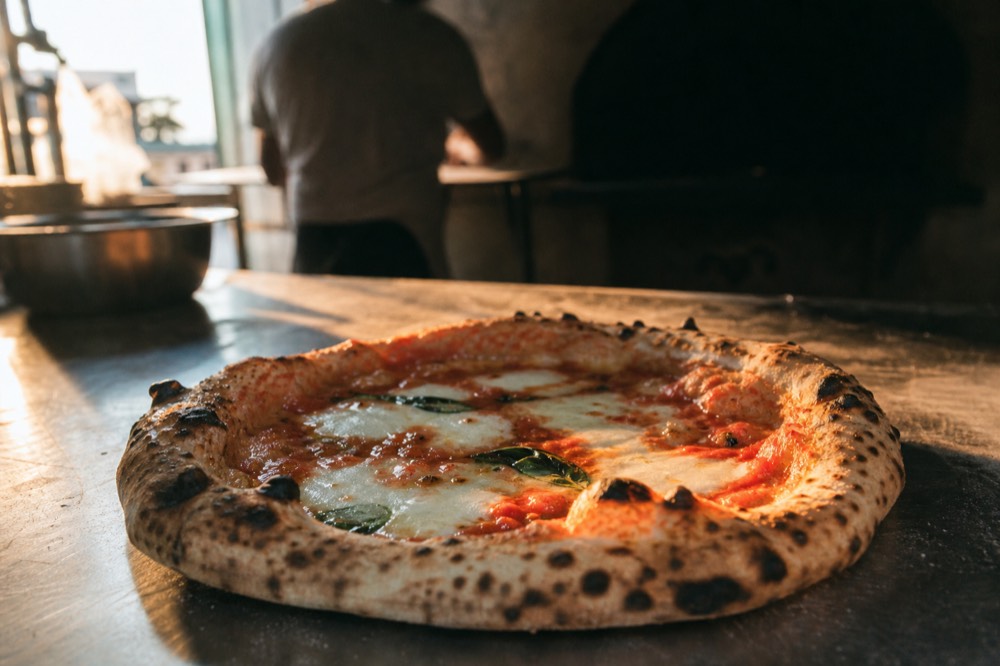
Pizza margherita. Tomato, mozzarella, basil, on a dough that rises 8 to 24 hours and bakes for 60 to 90 seconds in a wood-fired oven at 430 to 480°C. The name traces to an 1889 visit by Queen Margherita of Savoy, and the surviving thank-you letter is the documented part of that story.
The romantic version says pizzaiolo Raffaele Esposito of Antica Pizzeria Brandi invented the tricolor pizza for the queen in 1889 and named it after her. The documented part is narrower and more interesting: a letter of thanks dated June 1889 survives, Brandi was founded in 1760 as a tavern, and the tomato-mozzarella-basil combination appears in print as early as 1866. So the queen almost certainly ate it. She almost certainly did not inspire it. Naples has been comfortable holding both ideas for a century.
What is not in dispute is the technique. The official rules for Neapolitan pizza set dough balls at 200 to 280 grams, a finished disc no wider than 35cm, and a raised rim of 1 to 2cm. The certifying association was founded in 1984 and had roughly 600 certified pizzerias worldwide as of late 2025. Its professional course runs 9 days and 60 hours and costs €1,800, which tells you how much of this is craft rather than recipe. UNESCO agreed in 2017, when it inscribed the art of the Neapolitan pizzaiuolo on its intangible heritage list.
The practical takeaway for a visitor: a proper margherita arrives soupy in the middle, blistered and blackened in spots on the rim, and slightly floppy. That is correct. It is not undercooked. If it arrives crisp all the way through, you are eating something else. There is a whole etiquette around how to eat a Neapolitan pizza properly, and the short answer is that folding it is not a shortcut, it is the local method.
What Food Is Napoli Famous For?
Pizza, first and by a distance. After that: fried street food eaten from paper, above all the cuoppo and pizza fritta; pastry, meaning sfogliatella and babà; and buffalo mozzarella from the Campania plains, protected as a DOP product since 1993. Coffee culture sits underneath all of it.
Naples is unusual among Italian food cities because the famous list is almost entirely cheap and almost entirely portable. Bologna's reputation rests on things you have to sit down for. Naples built its reputation on food designed to be handed through a window to someone who is not stopping. That history is old and economic rather than charming: dense housing without kitchens produced a city that ate from the street.
That is also why the food geography is so specific. Individual dishes belong to individual streets in a way that does not really happen elsewhere. The table below is the version worth carrying around, and there is a longer breakdown of which neighborhood to eat in if you are choosing where to stay.
| Neighborhood | The dish it owns | Why it landed there | When to go |
|---|---|---|---|
| Via dei Tribunali and Spaccanapoli | pizza a portafoglio, pizza fritta | the densest run of wood-fired ovens and street windows in the city | late morning, before the lunch crush |
| Vomero | cuoppo | hill neighborhood with long-established friggitorie, Via Domenico Cimarosa 44 the reference address | afternoon, after the funicular up |
| Pignasecca and Montesanto | raw fish, produce, market frying | the oldest open-air market in the city, still local-first | Monday to Saturday, roughly 9 to 7 |
| Around Stazione Centrale | sfogliatella | Attanasio bakes from about 6:30am, Tuesday to Sunday | first thing, ideally before a train |
| Piazza San Domenico Maggiore | babà and pastry-counter classics | Scaturchio is the benchmark pasticceria on the square | mid-afternoon |
| Quartieri Spagnoli | small-plate street food, home-style fritters | a tight grid of alleys above Via Toledo, now a street food destination | daytime, or after dark with a guide |
| Chiaia and the Lungomare | taralli and aperitivo snacks | the seafront walking strip where people buy something to carry | early evening |
Everything on this page is orderable on your own, and everything is also on the itinerary of at least one of the Naples food tours we compare. The choice is not really about access. It is about whether you want to spend the first afternoon working out which window is turning dough over fastest, or arrive knowing.
Pizza Three Ways: Seated, Folded And Fried
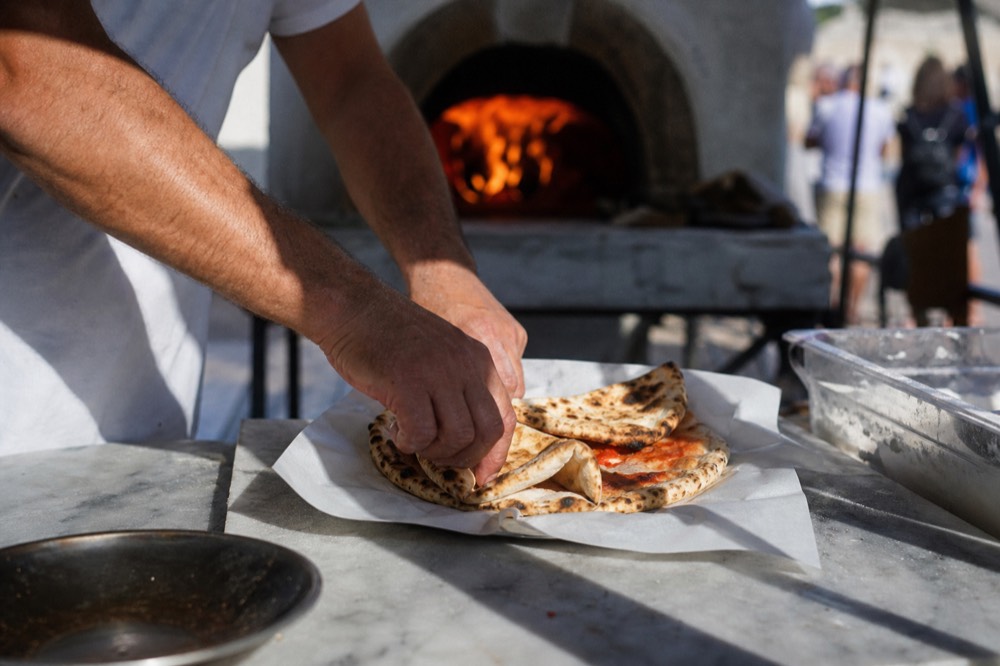
Naples serves pizza in three formats and they are not interchangeable. A seated margherita from a wood-fired oven runs about €6.50 plus a €1 cover at the famous rooms. A pizza a portafoglio, folded twice and handed over in paper, costs about €2. Pizza fritta, deep-fried and stuffed, sits between €2.50 and €4.
The seated version is the one people plan trips around, and it comes with a queue tax. L'Antica Pizzeria da Michele has traced its family to 1870, opened its first dedicated shop around 1906, and has occupied the room on Via Cesare Sersale since 1930. It serves marinara and margherita, nothing else. Dining in runs on a numbered ticket system, and waits reported by recent visitors range from 20 minutes on a quiet afternoon to around two hours at peak on a Saturday evening. It appears in the 2026 Michelin Guide Italia, which is a recommendation rather than a star. Gino e Toto Sorbillo on Via dei Tribunali works differently: your name goes on a list at the door and someone shouts it when a table opens.
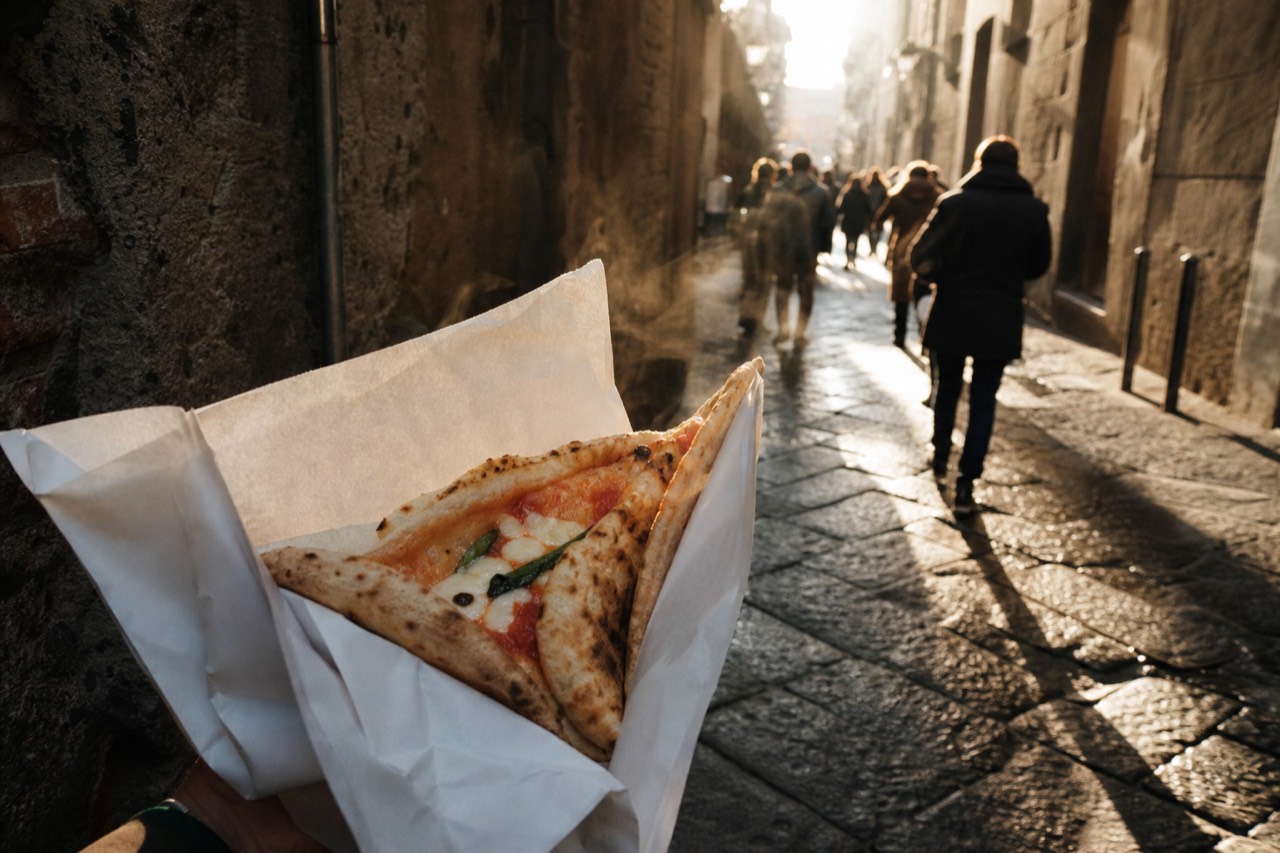
The folded version is the one that actually defines the city. Di Matteo's street window at Via dei Tribunali 94 sells pizza a portafoglio for about €2 from roughly 9am until midnight, and the transaction takes seconds. You fold it in half, then in half again, and eat it from the point inward while walking. It is the same dough and the same oven as the seated pizza inside. You are paying less because you are not occupying a chair.
Pizza fritta is the least understood of the three and often good value. Dough is stuffed, usually with ricotta and provola plus cured pork, then sealed and deep-fried until it inflates. The original planning range is €2.50 to €4; check the counter price. A pizza-tasting walk offers a way to compare several styles in one outing. Related reading: where to find the best pizza.
Cuoppo, Frittatina And The Rest Of The Fried Counter
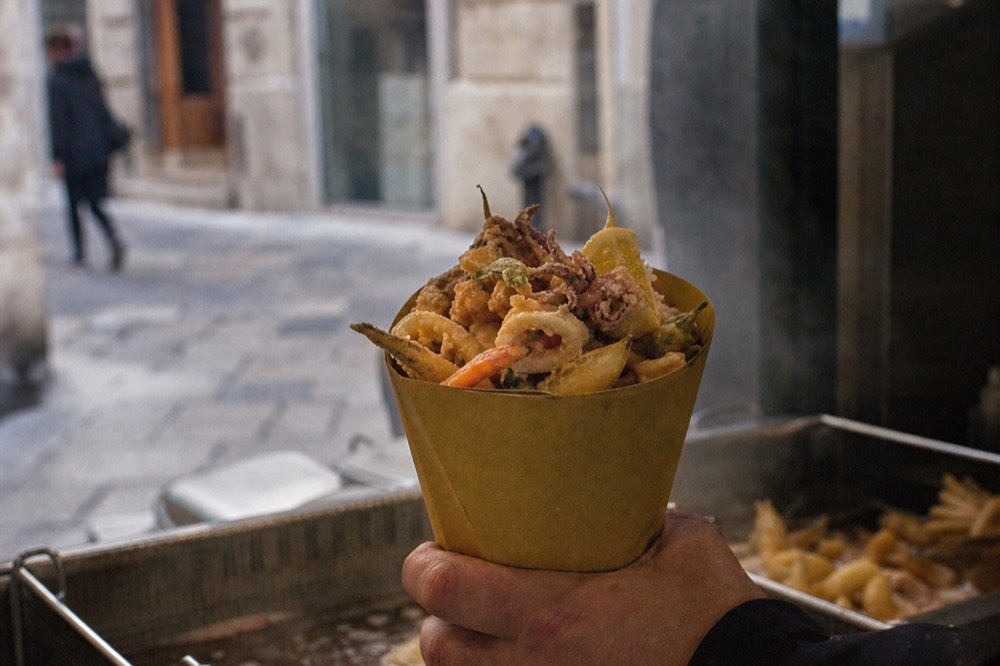
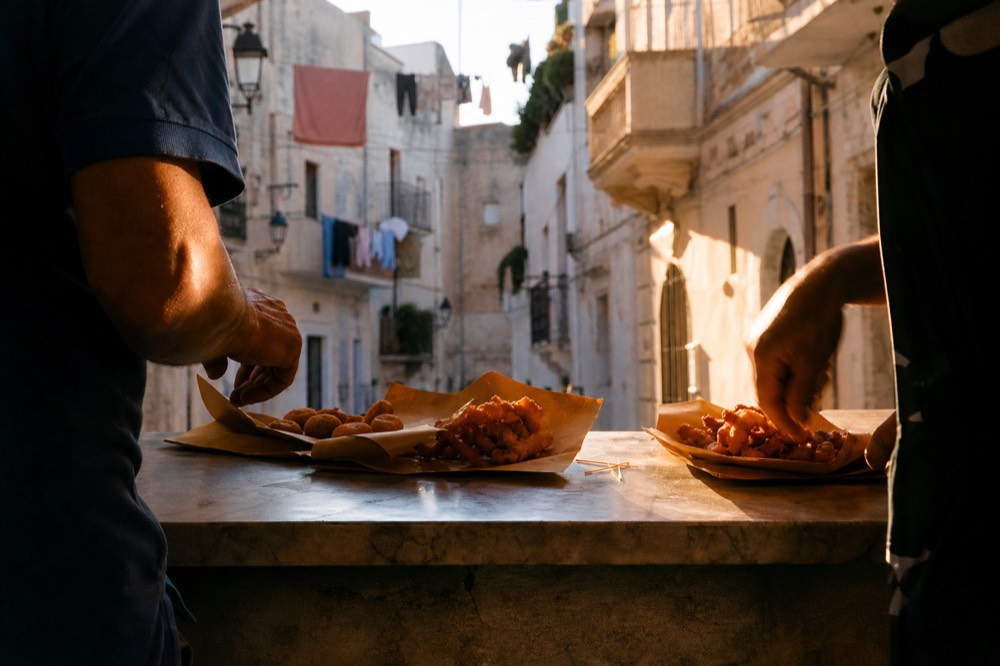
A cuoppo is a paper cone of fried food, €3 to €6 depending on size and whether you order the seafront version or the vegetable one. The other counter staples are pizza fritta at €2.50 to €4, frittatina di pasta at €2 to €3, and crocché and other potato fritters sold alongside them.
Friggitorie are their own institution, separate from pizzerias, and they keep split hours. Friggitoria Vomero at Via Domenico Cimarosa 44 is the reference address, open Monday to Saturday roughly 10:00 to 14:30 and again 16:30 to 21:30, closed Sunday. That afternoon gap catches people out constantly. Turn up at three and the shutter is down, turn up at five and the oil is fresh, which is exactly when you want to be there.
The cuoppo di mare is small fried fish, calamari rings, sometimes prawns, all floured and dropped together. The cuoppo di terra swaps in vegetables, arancini, crocché and fritters. Neither is delicate. Both are eaten fast, because the paper only does the work of a plate for as long as it takes to walk down the street.
Frittatina di pasta is the one first-timers miss and then order three times. It is leftover pasta bound with béchamel, traditionally with ham and peas, packed into a puck, breaded and fried. Two to three euros. It is unapologetically heavy and it is the reason Neapolitan afternoons run slow. The full anatomy of every fried item, plus which counters run the fastest turnover, sits in our street food item by item breakdown.
Sfogliatella Riccia Or Frolla: Which One To Order
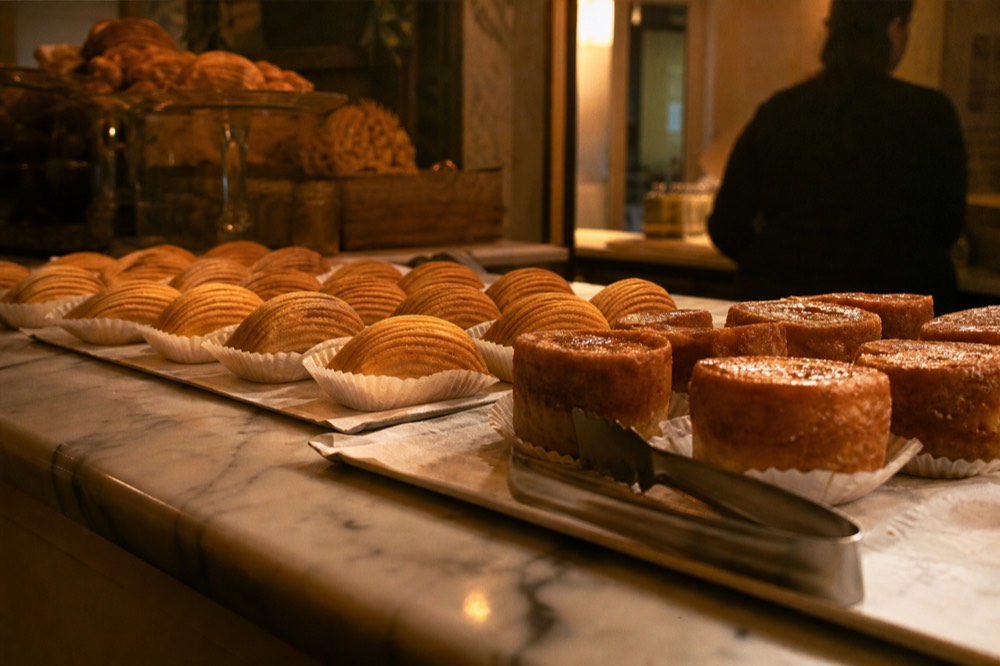
Riccia is the ribbed, shell-shaped one built from paper-thin layers that shatter when you bite it, €2 to €2.50. Frolla is the smooth round shortcrust version, €1.50 to €2. The filling is identical in both: semolina, ricotta, candied citrus peel and cinnamon. Riccia is the icon, frolla is the easier eat.
The decision matters less than the timing. A riccia that has just come out is one of the best pastries in Italy. The same pastry four hours later has gone soft, and soft is the exact thing riccia is not supposed to be. This is why Attanasio, in the lanes near Stazione Centrale, has queues at seven in the morning: it opens around 6:30am Tuesday to Sunday and it is closed on Monday, and people time their arrival to a tray rather than a clock.
| Riccia | Frolla | |
|---|---|---|
| Pastry | many paper-thin layers, fanned like a scallop shell | short crust, smooth and rounded |
| Texture | shatters, crackles, leaves flakes down your front | soft and crumbly, closer to a biscuit case |
| Filling | semolina, ricotta, candied citrus peel, cinnamon | the same |
| Price | €2 to €2.50 | €1.50 to €2 |
| Best eaten | within minutes of the tray coming out | more forgiving, survives a walk |
| Order it if | you want the texture that made it famous | you want the flavor without the mess |
One local convention worth copying: order it at the counter, eat it standing, do not carry it away. Naples treats pastry the way it treats coffee, as a two-minute event rather than a takeaway. If breakfast is the meal you care about, the Neapolitan breakfast has more on the espresso-and-pastry ritual and what time counters actually get busy.
Babà, And The Rest Of The Pastry Counter
Babà al rum is a yeasted sponge soaked in rum syrup, €2 to €3 at a counter, sold plain or split and filled with cream. Scaturchio on Piazza San Domenico Maggiore is the benchmark version. The rest of the counter runs to pastiera, delizia al limone and ricotta-filled things that change by season.
Babà is dense, spongy and genuinely alcoholic, and the good ones drip when you press them. It is also the Neapolitan insult and compliment rolled into one, since calling someone "nu babà" means they are sweet. Locals buy them boxed and tied with ribbon on Sundays, which is why pastry counters get chaotic around noon at the end of the week.
The sensible way to handle sweets in Naples is by hour rather than by preference. The city does not eat savory at breakfast, it fries in the late afternoon, and it treats the pastry counter as both a morning and a mid-afternoon destination.
| Hour | Savory move | Sweet move | Why that order |
|---|---|---|---|
| 7 to 10am | nothing, Naples does not do savory breakfast | sfogliatella riccia at a bar counter | pastry counters bake first thing, one near the station is going from about 6:30am |
| 11am to 1pm | pizza a portafoglio from a street window | ovens are hot and turnover is fastest before lunch | |
| 1 to 3pm | seated margherita | the famous rooms fill at 1pm, so go at noon or after 2:30pm | |
| 3 to 6pm | cuoppo, frittatina, pizza fritta | babà at a pastry counter | friggitorie run an afternoon shift, often reopening around 16:30 |
| 6 to 8pm | taralli on the seafront | gelato, or a second sfogliatella | aperitivo hour, and the walking strip is at its best |
| after 8pm | pizza again, seated or folded | street windows stay open late, one on Via dei Tribunali runs to about midnight |
Mozzarella Di Bufala DOP, And Why It Does Not Travel
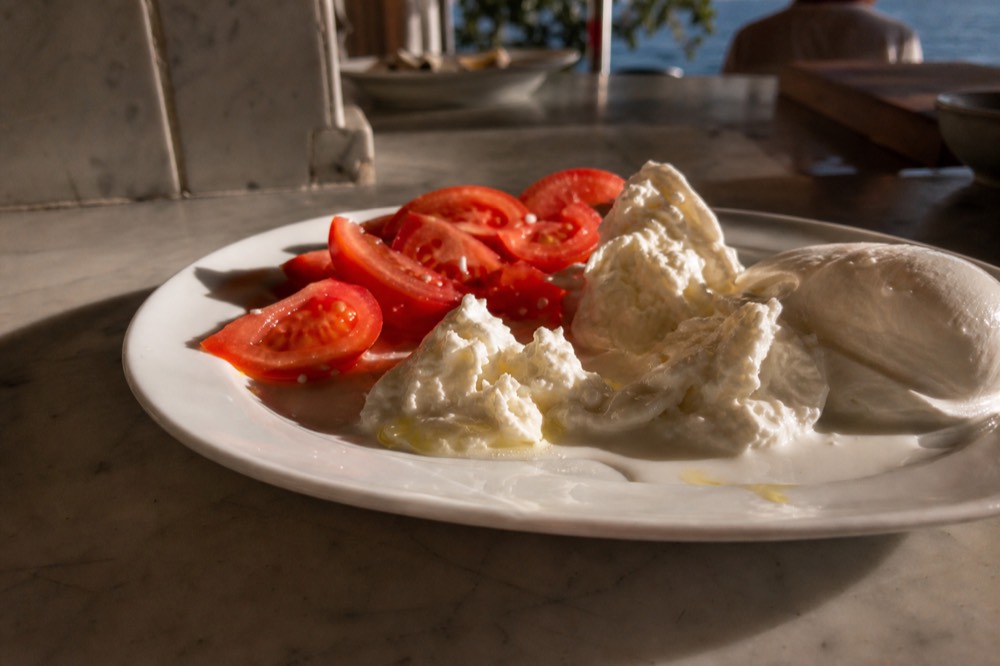
Mozzarella di bufala campana has held DOP protection since 1993. Producers made roughly 55.7 million kilos in 2024 and exported around 37% of it. The version you eat in Campania is usually a day old or less, which is the entire difference: it should be warm-ish, weeping whey, and slightly springy rather than rubbery.
The mozzarella sold at a deli counter in the Pignasecca and the mozzarella sold in a supermarket abroad are technically the same protected product and practically two different foods. Fresh buffalo mozzarella starts losing its texture within a day or two. It is stored in its own whey, it is never refrigerated hard, and the good counters will ask what time you plan to eat it.
Order it as a plate with nothing on it, or with a few slices of tomato and oil at most. Anything more is covering it up. It is also one of the few classics on this list that is naturally gluten-free, which makes it a genuinely useful fallback if you are eating around wheat all week.
Buy mozzarella from a market counter if you want to order by weight, and plan to eat it promptly. Ask for the amount you need and how to store it. A market tasting walk does not include a visit to a mozzarella factory. Related reading: Naples food markets.
Coffee, Taralli And The Small Purchases Locals Actually Make
Naples drinks espresso at the bar, standing, in about ninety seconds, and it is served short, dark and pre-sweetened unless you say otherwise. Taralli 'nzogna e pepe are the savory ring biscuits made with lard, pepper and almonds, sold by weight and eaten walking the seafront. Neither shows up on a tourist list. Both are what daily eating actually looks like.
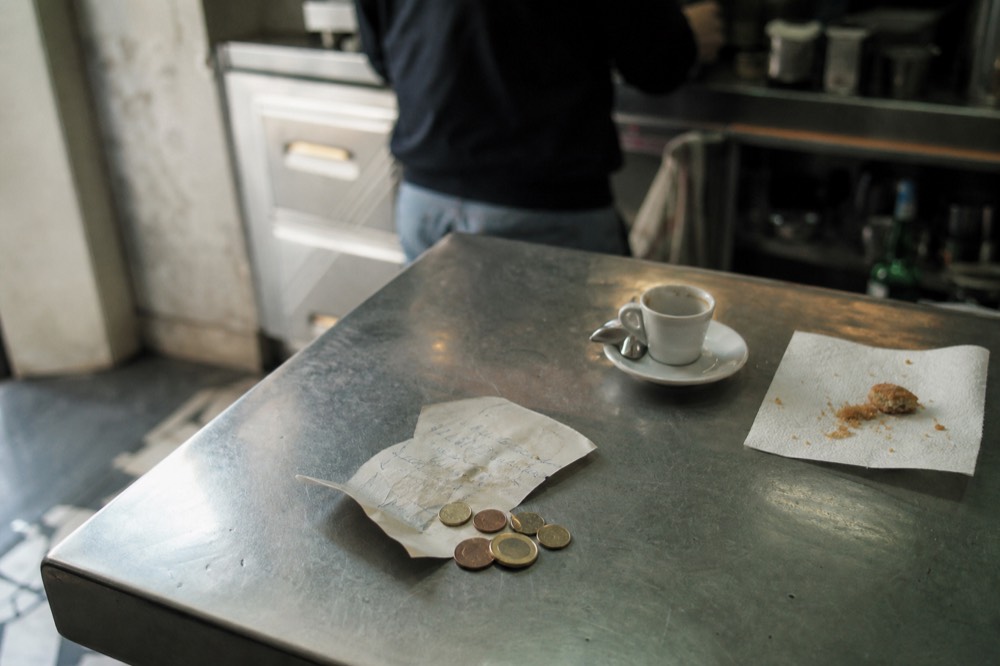
The coffee ritual has rules and they are easy to follow. You pay at the till first in many bars, you hand the receipt to the barista, you drink at the counter, and you leave. Sitting at a table can carry a different price. Ask for it "amaro" if you do not want sugar, because sweetened is the default in a lot of places. The caffè sospeso tradition, where someone pays for an extra coffee for whoever needs one later, started in this city and still exists in some bars.
Taralli are a Chiaia and Lungomare habit. You buy a bag from a stand, you walk, you eat them looking at the water, and the whole thing costs almost nothing. They are hard, savory and peppery, made with lard rather than butter, and they go with beer better than with wine.
The other small purchase worth making is fruit from a market cart, particularly in summer when the Campanian tomatoes and the annurca apples in autumn are cheap enough to be an afterthought. None of this needs a plan. It just needs you to buy the way the queue in front of you is buying.
Can You Eat The Naples Canon Vegetarian, Vegan Or Gluten-free?
Vegetarian is straightforward: pizza, sfogliatella, babà and mozzarella all qualify. Vegan is harder but not impossible, since pizza marinara is tomato, garlic, oregano and oil with no cheese by definition. Gluten-free is the real constraint, because nearly the entire street food list is wheat, fried in shared oil.
The table below is the practical version. The two things to actually ask about are shared fryer oil, which affects almost every vegetarian fried item, and whether a pizzeria keeps a separate gluten-free base, which some do and many do not. Neapolitan servers are used to the question and will tell you straight.
| Dish | Vegetarian | Vegan | Gluten-free | Watch for |
|---|---|---|---|---|
| Pizza margherita | yes | no, mozzarella | no | ask whether a gluten-free base exists before sitting down |
| Pizza marinara | yes | yes | no | tomato, garlic, oregano, oil, no cheese at all |
| Pizza a portafoglio | usually, it is a margherita base | no | no | the folded street version is rarely made without cheese |
| Pizza fritta | not as standard | no | no | the classic filling is ricotta, provola and cured pork |
| Cuoppo di mare | no | no | no | fried fish and shellfish together |
| Cuoppo di terra | yes | often | no | vegetable version, but fried in shared oil |
| Frittatina di pasta | not as standard | no | no | the classic version has ham and peas in béchamel |
| Sfogliatella | yes | no | no | ricotta and semolina filling |
| Babà al rum | yes | no | no | egg-rich dough soaked in rum syrup |
| Taralli 'nzogna e pepe | no | no | no | made with lard, which is the point of them |
| Mozzarella di bufala DOP | yes | no | yes | naturally gluten-free, and the best fallback on this list |
What Does A Full Day Of Eating In Naples Cost?
A three-item circuit of folded pizza, cuoppo and sfogliatella was budgeted here at €12 to €15. Adding a fritter, babà and a seated pizza increases the total; use current counter prices for your own plan. A guided route is a separate quote covering its specified tastings and guide time.
Those numbers are the reason Naples reads as good value even during a tourism surge. The city logged around 15 million tourist stays in 2025, up about 4% year on year, and it is still cheaper for casual eating than Rome or Florence, with little sign so far of the boom landing on street food prices.
| What you eat | Ordering it yourself | Note |
|---|---|---|
| Sfogliatella riccia at a bar counter | €2 to €2.50 | the espresso alongside is a separate, small line |
| Pizza a portafoglio from a street window | about €2 | the same dough and oven as the seated version |
| Cuoppo of fried seafood | €3 to €6 | size and mix decide where in that range you land |
| Frittatina di pasta | €2 to €3 | one is a snack, two is lunch |
| Babà at a pastry counter | €2 to €3 | more if you have it filled with cream |
| Seated margherita in the evening | about €6.50 plus €1 cover | plus the wait, which is the real cost |
| Six-item day, added up | roughly €18 to €24 | the classic three-item circuit alone is €12 to €15 |
The other line most people forget is the tourist tax, charged per person per night by accommodation class and running €4.00 to €6.00 for 2026. It is small, it is collected at checkout, and it surprises people who budgeted to the euro. Anyone tracking food spend more closely will find the arithmetic broken down further in what a pizza actually costs.
Which Dishes Are Hardest To Find On Your Own?
Pizza and pastry are easy: the famous addresses are on every map and the queues tell you where to stand. The hard ones are the fried counters, which are off the main axis and keep split hours, and anything that depends on timing rather than location, above all a sfogliatella straight off the tray.
The gap between eating well and eating brilliantly in Naples is almost entirely about turnover. A window turning over hundreds of folded pizzas a day is making better pizza than one selling a handful, for reasons that have nothing to do with skill. Locals know which is which by looking at the counter. Visitors usually do not, which is where a guided walk earns its cost rather than just saving effort.
The two-hour Pignasecca tasting walk includes six stops. Compare its current quote with your own food budget and the value of having a guide. The independent route costs only what you choose to eat and drink. Related reading: the street food tour lineup, plan your own tasting route.
How To Fit The Whole List Into Two Days
Two days is enough for the whole classic list if you split it by format rather than by neighborhood. Day one runs the street: pastry, folded pizza, fried counter, seated pizza at night. Day two goes to the market, then a class or a private walk, then the seafront for taralli and an aperitivo.
Day one starts early and near the station, because that is where the pastry is freshest and the queue is shortest before eight. Walk west into the historic center along Spaccanapoli, buy a folded pizza on Via dei Tribunali around eleven, and keep the middle of the day loose. Take the funicular up to Vomero in the late afternoon for a cuoppo once the friggitorie reopen, come back down for a seated pizza after eight when the ticket queues have thinned.
Day two can focus on the Pignasecca market: buy mozzarella by weight, eat a frittatina standing, then leave a break for the afternoon. A three-hour pizza-and-tiramisù class is an optional way to continue with cooking; check its start time before arranging the morning. Related reading: hands-on pizza classes.
If you only have one evening left after that, spend it walking rather than sitting. Naples eats best on foot, at counters, in short bursts, and the classics on this page were built for exactly that. Everything here is priced from what the counters and listings were charging when we last checked.
Choose Your Naples Experience
Historic Centre Street Food Walk. Taste fried pizza, mozzarella and Neapolitan pastries while an English-speaking guide connects the old streets. Have a date in mind? Check it before arranging the rest of your Naples day.
150 minutes. Meet by the Greek ruins in Piazza Bellini; follow your confirmation if meeting details change. 2.5 hours walking and standing; seats are not guaranteed. Vegetarian requests need advance notice; no vegan, gluten-free or dairy-free diets. Extra drinks cost extra.
Choose a date to see scheduled departures. Final availability and price are confirmed on Viator.
No verified experience fits those requirements. Adjust your choices, or keep the independent plan described above.
Compare Options And Fit Your Plans
General recommendation until you choose. Confirm the exact option, meeting point, inclusions and dietary arrangements when booking. A food walk does not promise a visit to a particular celebrity pizzeria. Allow travel time on top of the activity duration.
- Pignasecca Market And Six Tastings: 120 minutes. Explore the working market with a guide, from folded pizza and a seafood cone to a sweet finish. Meet outside San Liborio church, Piazza Carità 12. Select the vegetarian option when needed. Food and drinks listed in your chosen option are included; extra orders are separate. A market walk, not a shopping-and-cooking class.
- Pizza And Tiramisù Cooking Class: 180 minutes. Knead, shape and top a margherita, make tiramisù, then eat your creations with a drink. Meet at Via delle Zite 30. Ingredients and tools are provided; transfers are excluded. Under-18s need a parent or legal guardian. Dietary substitutions beyond the listed marinara option need operator confirmation.