How Do You Properly Eat A Napoli Pizza?
There is no shame in a knife and fork. Here is how Naples actually eats a Napoli pizza, at the table and folded a portafoglio on the street for about €2.
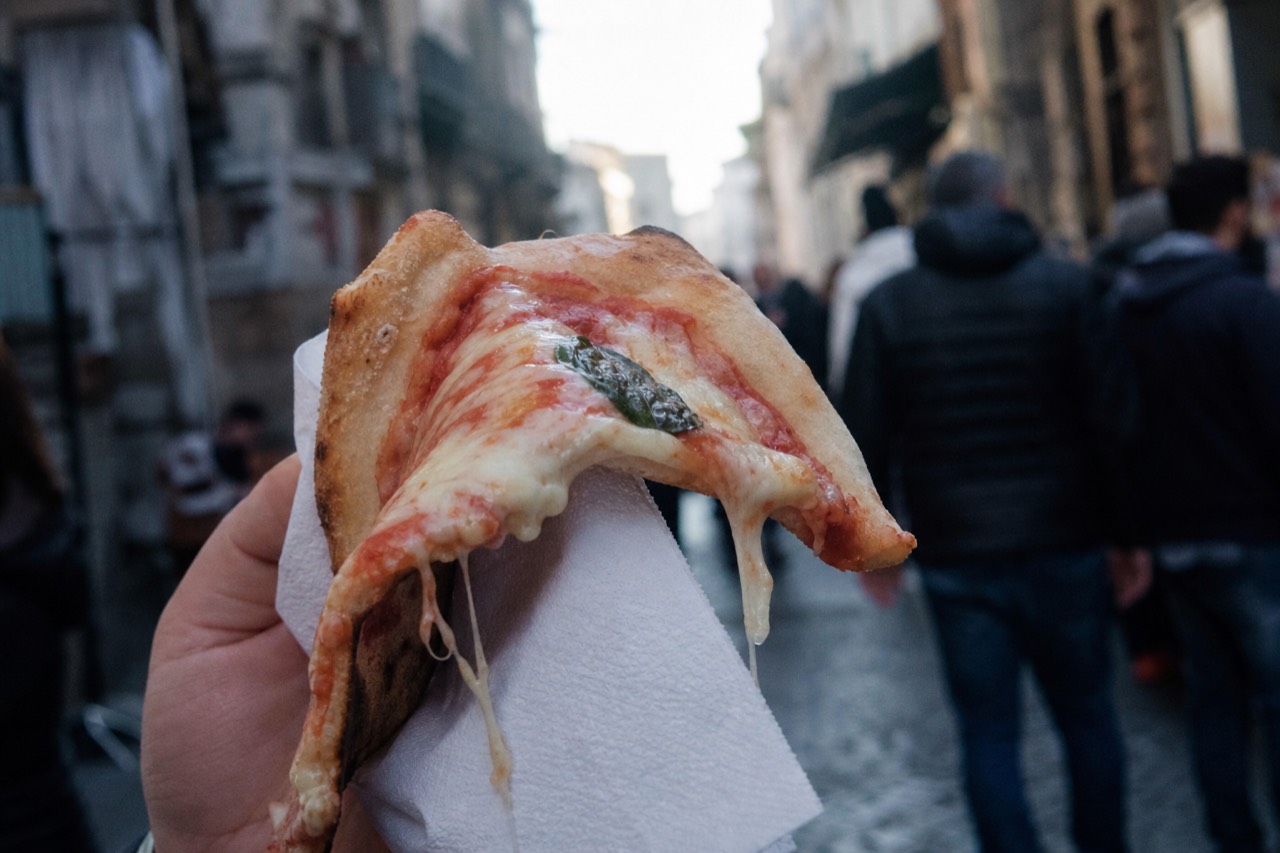
Visitors arrive braced for an etiquette test that does not exist. There is no waiter waiting to correct you, no unwritten code about which end of the wedge goes first. What there is, instead, is a pizza engineered to be difficult, and a couple of local solutions that have been in use for two hundred years.
Keep the independent food plan below, or add a guided experience for the food, place or technique that interests you most.
Booking choice: Knead, shape and top a margherita, make tiramisù, then eat your creations with a drink. Explore Pizza And Tiramisù Cooking Class
Do You Eat Neapolitan Pizza With A Knife And Fork Or With Your Hands?
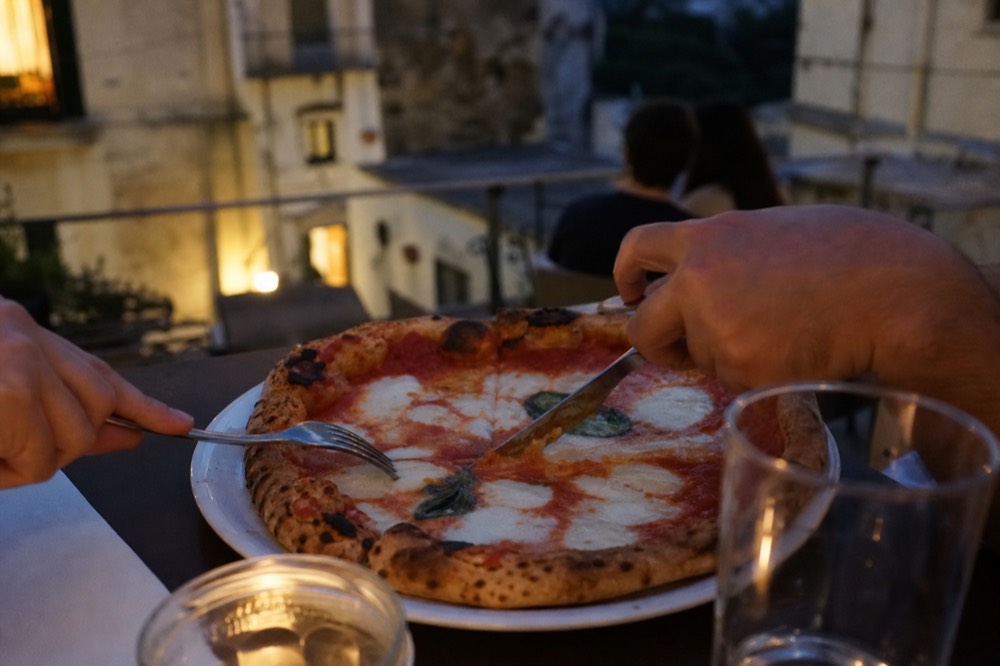
Both, and usually in that order. Sitting down, most people cut from the centre outward with cutlery because the middle is too soft to lift, then pick up the outer third by hand once the wet part is gone. Using a fork in Naples is not a tourist tell. It is the practical answer to the way the pizza is built.
The confusion comes from importing American habits. A folded, hand-held slice works because that dough was baked long enough to hold itself rigid. Neapolitan dough is not. Try the same grip on a margherita fresh out of a wood oven and the topping ends up on the tablecloth, which is why the room around you is quietly wielding knives.
There is a second, older method, and it belongs on the street rather than at a table. More on that below.
Why Is The Middle Of A Napoli Pizza So Wet?
Because the specification makes it so. A wood oven at 430 to 480°C sets the rim in 60 to 90 seconds, far too fast for the centre to dry. Add hand-crushed raw tomato instead of a thick cooked sauce, plus sliced buffalo mozzarella releasing water as it melts, and a soupy middle is the guaranteed outcome.
Every one of those choices is written down. The official rules for true Neapolitan pizza forbid a dense sauce, require the wood oven and the bake window, and cap the disc at 35cm with a rim raised 1 to 2 cm. Nothing in there asks for a crisp base. The style is defined by that softness, and pizzerias that produce a rigid, cracker-like base are simply making something else.
So the wetness is the product working correctly. If you want the full account of how those rules shaped the city's reputation, why Napoli pizza became famous covers the standard and the heritage listing behind it.
How Do You Fold A Pizza A Portafoglio?
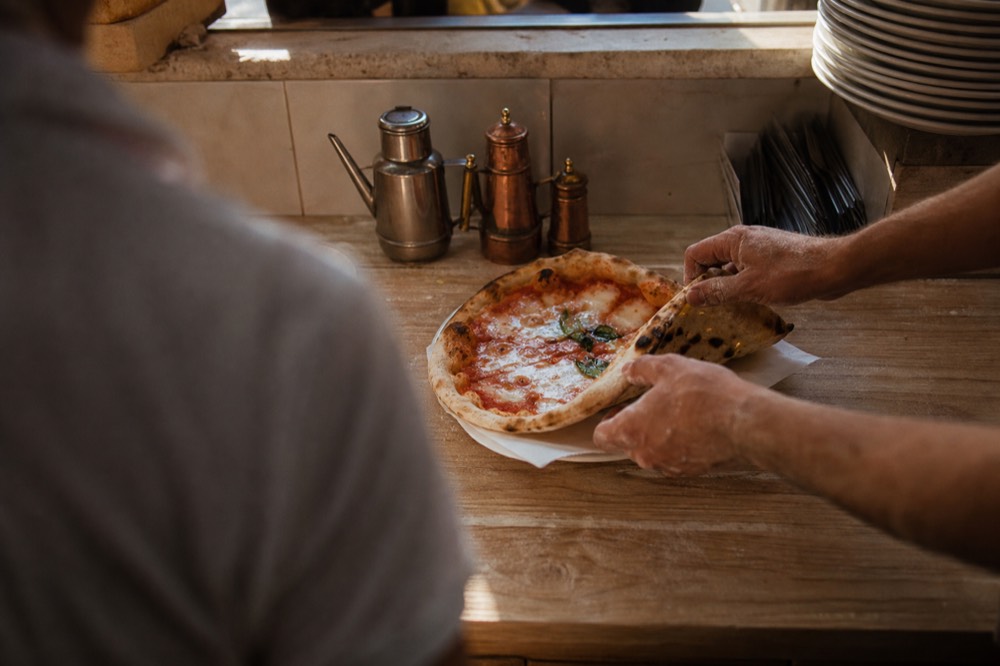
In four. The pizzaiolo folds the whole pizza in half, then in half again, wraps the base in paper so the grease stays off your hand, and passes it out through a street window. Portafoglio means wallet, which is exactly the shape you end up holding. Around €2 at the Di Matteo window on Via dei Tribunali 94, open roughly 9am to midnight.
The fold solves the wet-centre problem by turning the pizza into its own container. The soft middle is sealed between four layers of crust, the paper takes the drips, and you can walk and eat at the same time without a plate. It is the oldest way pizza was ever sold in this city, from a period when nobody sat down for it at all.
Eat it quickly. The whole engineering of it assumes a hot pizza and a short walk, and a portafoglio that has gone cold in a bag is a sad object. It is also the cheapest full meal in the centre, which is the starting rung on the ladder in what a pizza costs in Naples.
What Do Locals Actually Care About?
Almost none of the things visitors worry about. Cutlery, cola, leaving the rim, queueing for an hour: all normal, none of it noticed. The one thing that does get judged is letting a pizza sit and go cold while you photograph it.
| Common worry | What actually happens |
|---|---|
| Reaching for a knife and fork | Standard in the dining rooms. The wet centre the recipe demands is easier to handle with cutlery. |
| Folding it and eating on the move | A recognised format with its own name, sold from street windows for about €2. |
| Ordering only a plain margherita | At Da Michele that is half the menu. Marinara and margherita are the only two pizzas served. |
| Drinking cola with it | A sitting US president did exactly that with a folded pizza on Via dei Tribunali in July 1994. |
| Queueing before you eat | Built into the system. Da Michele issues numbered tickets, Sorbillo takes your name at the door. |
| Leaving the rim on the plate | The cornicione is 1 to 2 cm of puffed dough by specification, so it is bread. Nobody is auditing your plate. |
Waits at the famous rooms run from about 20 minutes to two hours at peak, and the ticket in your hand is a licence to wander rather than a sentence. Most people use the gap on something small nearby, which is where the Naples street food dish list earns its keep.
What Do You Drink With A Neapolitan Pizza?
Whatever you like, because no rule exists. The city's own guided evenings pour spritz and local wine, and the most famous documented pairing in modern Naples history is a president drinking Coca-Cola with a folded pizza at a street window in 1994.
That 1994 detail is real and well recorded: Bill Clinton stopped at Antica Pizzeria Di Matteo during the July G7, ate a pizza a portafoglio, and drank Coke with it. The pizzaiolo who served him, Ernesto Cacialli, later opened his own place and became a small legend in the trade. If you want the fuller version, where Bill Clinton ate his pizza tells it properly.
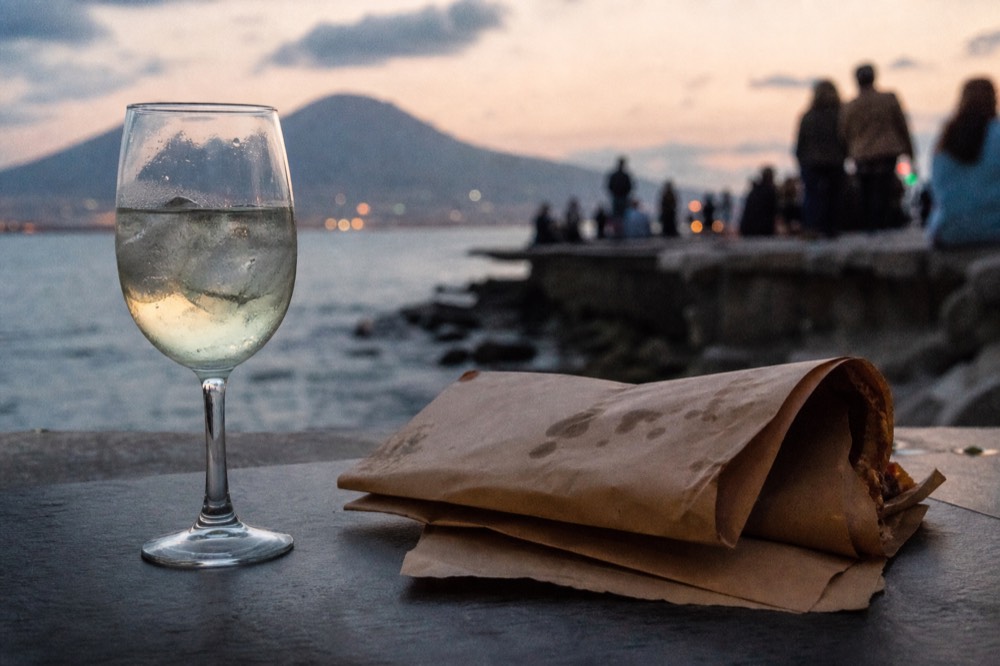
Spritz, wine, beer and water can all work with pizza. The drink included in a class or walk depends on the option; extra orders may cost more. Related reading: private and evening food tours.
Do Cooking Classes Teach The Fold?
The verified classes teach kneading, shaping and topping pizza. A portafoglio fold is not a promised inclusion; ask the chef if that demonstration is your priority. Handling and eating your own pizza still helps explain its soft centre.
Handling the dough helps explain why a freshly baked pizza needs support. The three-hour class includes kneading, shaping and topping; ask the chef if you specifically want a portafoglio demonstration. Related reading: pizza cooking classes in Naples.
If you would rather work it out on foot, a self-guided eating route maps the street windows and the sit-down rooms in an order that makes sense on a single day. Either way, order the margherita, cut from the middle, and stop worrying about the fork.
Choose Your Naples Experience
Pizza And Tiramisù Cooking Class. Knead, shape and top a margherita, make tiramisù, then eat your creations with a drink. Have a date in mind? Check it before arranging the rest of your Naples day.
180 minutes. Meet at Via delle Zite 30. Ingredients and tools are provided; transfers are excluded. Under-18s need a parent or legal guardian. Dietary substitutions beyond the listed marinara option need operator confirmation.
Choose a date to see scheduled departures. Final availability and price are confirmed on Viator.
No verified experience fits those requirements. Adjust your choices, or keep the independent plan described above.
Compare Options And Fit Your Plans
General recommendation until you choose. Confirm the exact option, meeting point, inclusions and dietary arrangements when booking. A food walk does not promise a visit to a particular celebrity pizzeria. Allow travel time on top of the activity duration.
- Pizza And Drinks With Eating Europe: 210 minutes. Taste several pizza styles, including fried pizza, with local drinks and stories across the historic centre. Meet in front of Libreria Berisio; confirm the precise address and finish when booking. 3.5 hours; stops can vary. Extra drinks and transfers are excluded. A minimum of two guests is needed to run; under-4s can accompany without included food. Dietary requests require advance confirmation.
- Historic Centre Street Food Walk: 150 minutes. Taste fried pizza, mozzarella and Neapolitan pastries while an English-speaking guide connects the old streets. Meet by the Greek ruins in Piazza Bellini; follow your confirmation if meeting details change. 2.5 hours walking and standing; seats are not guaranteed. Vegetarian requests need advance notice; no vegan, gluten-free or dairy-free diets. Extra drinks cost extra.