How Much Does A Pizza Cost In Naples?
A pizza in Naples costs about €2 folded at a street window and around €6.50 plus a €1 cover sitting down. Here is the full 2026 price ladder.
In Naples the cheapest food is also the food people queue for, which scrambles the usual travel maths. Paying more rarely buys a better pizza. It buys a chair, a plate and a room with a story attached.
Keep the independent food plan below, or add a guided experience for the food, place or technique that interests you most.
Booking choice: Explore the working market with a guide, from folded pizza and a seafood cone to a sweet finish. Explore Pignasecca Market And Six Tastings
What Does A Sit-down Margherita Cost In Naples?
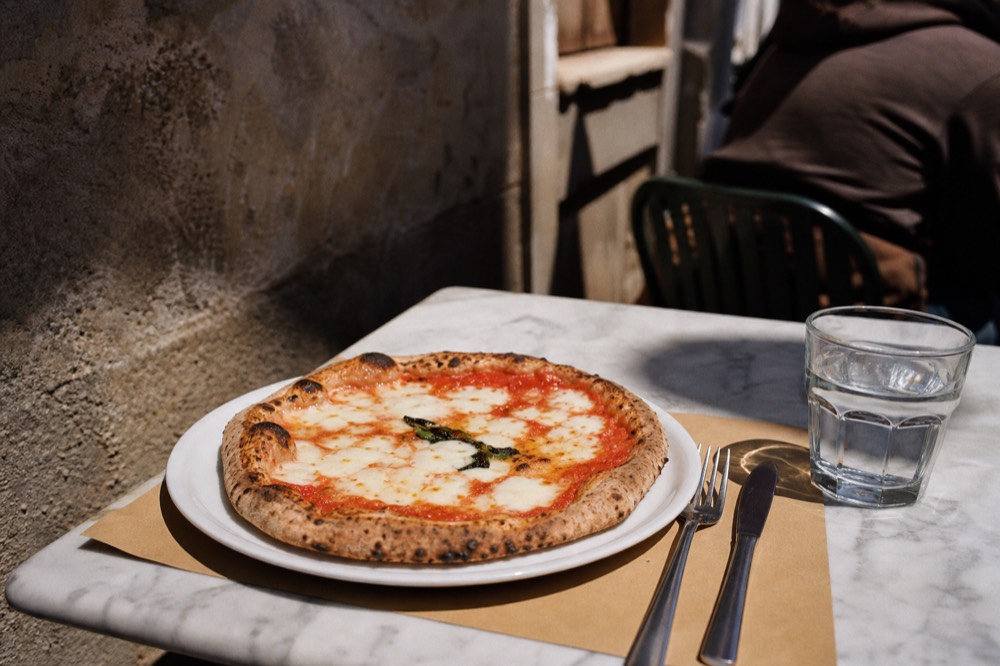
Around €6.50, plus roughly €1 as a cover charge. That is the figure reported at L'Antica Pizzeria da Michele, the most famous pizzeria in the city, and the famous historic rooms generally sit in a €6.50 to €7 band for a plain margherita. There is no upsell path either: marinara and margherita are the entire menu there.
Read that number twice, because it explains a lot about Naples. The room that draws two-hour queues, appears in the 2026 Michelin Guide Italia and has been running under the same family since 1870 charges less for its signature dish than a mediocre pizza costs in most European capitals. The business model is volume, a two-item menu and fast tables, not margin per plate.
The cover charge, the coperto, is normal and legal across Italy. It covers the table, the bread service and the sitting rather than being a tip, it should be printed on the menu, and it applies per person whether you order one pizza or four courses.
What Is The Cheapest Way To Eat Pizza In Naples?
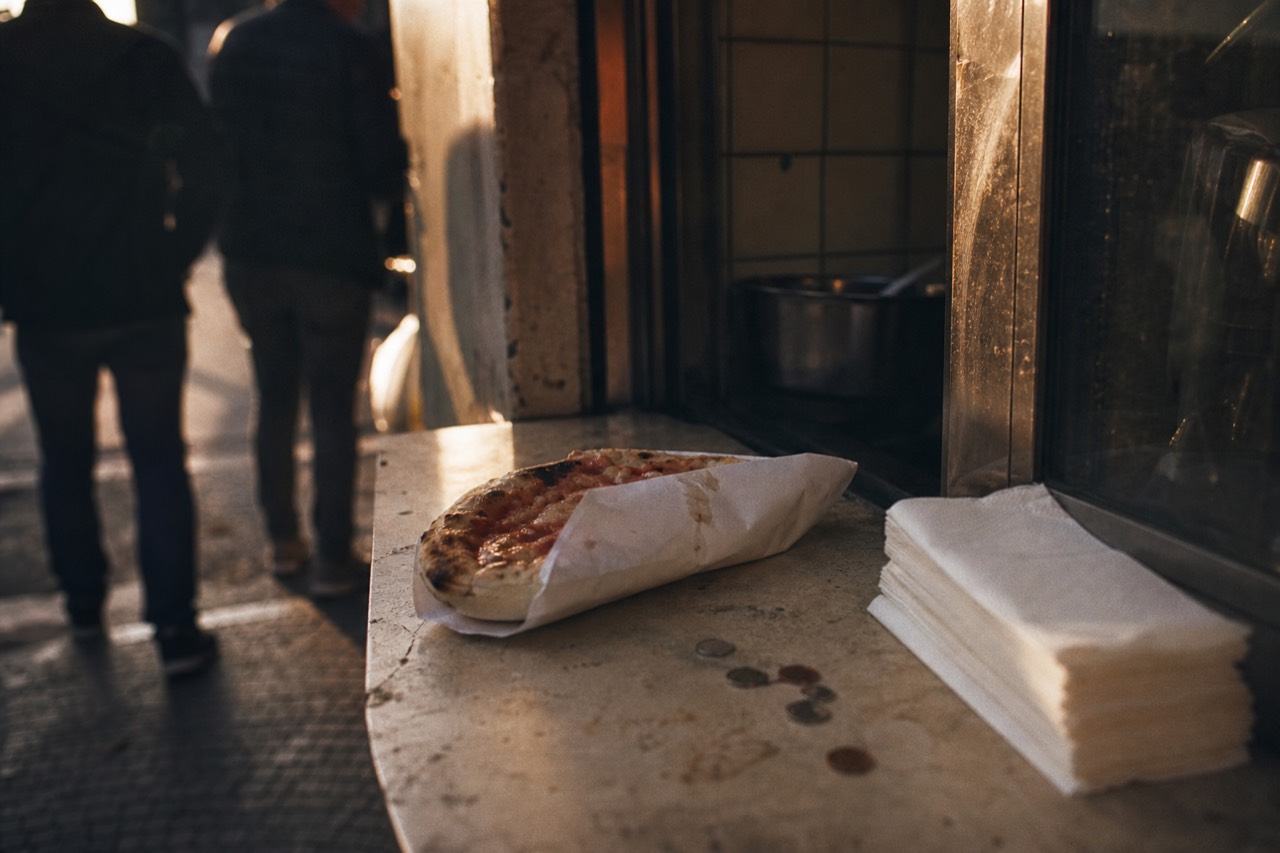
A pizza a portafoglio at a street window, about €2. It is a full-size margherita folded twice into a wallet shape and wrapped in paper. The Di Matteo window on Via dei Tribunali 94 sells them from roughly 9am to midnight, and a fried pizza fritta from the same kind of counter runs €2.50 to €4.
At those prices the arithmetic stops mattering. You are eating the same dough, out of the same wood oven, made by the same hands as the plated version inside. What you give up is the chair and the fifteen minutes.
The fold is not just cost-cutting either. It is the format pizza was invented in, back when nobody sat down for it, and there is a technique to eating one without wearing it: how to eat a Neapolitan pizza properly walks through both methods.
What Does Everything Else On The Street Cost?
Nothing on a Naples street food circuit breaks €6. Fried snacks, pastries and folded pizza all sit between €1.50 and €6, which is a large part of why Naples eats far cheaper than Rome or Florence.
| Item | What it is | Typical price | Where it is reliably good |
|---|---|---|---|
| Pizza a portafoglio | Full margherita folded in four, wrapped in paper | about €2 | Di Matteo window, Via dei Tribunali 94, roughly 9am to midnight |
| Pizza fritta | Fried stuffed pizza, sold from the same counters | €2.50 to €4 | Friggitorie along the Spaccanapoli axis |
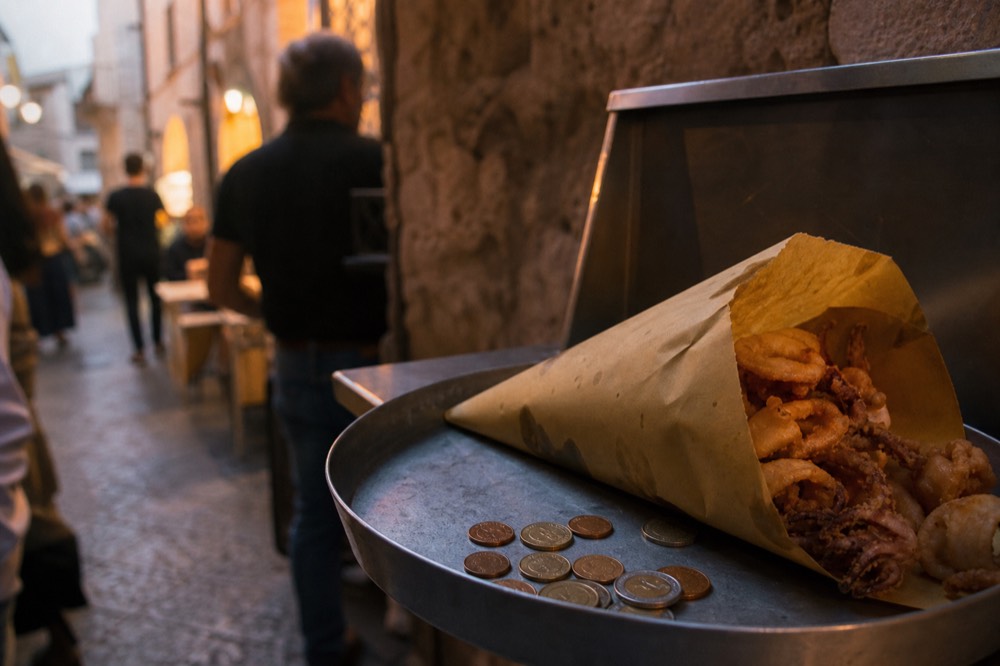
| Cuoppo | Paper cone of fried seafood or vegetables | €3 to €6 | Friggitoria Vomero, Via Domenico Cimarosa 44 |
| Sfogliatella riccia | Crisp layered shell, hot from the oven | €2 to €2.50 | Attanasio near Stazione Centrale, Tue to Sun from about 6:30am |
| Sfogliatella frolla | Soft short-crust version of the same | €1.50 to €2 | The same counters, usually a little cheaper |
| Babà | Rum-soaked sponge | €2 to €3 | Scaturchio, Piazza San Domenico Maggiore |
| Frittatina di pasta | Fried pasta fritter, crisp outside | €2 to €3 | Friggitorie and rosticcerie citywide |
| Sit-down margherita | Plate, table, cutlery, cover charge | about €6.50 plus €1 | The historic rooms of the centre |
Prices drift a little by portion and vendor, and a cuoppo priced at the top of its range is usually a bigger cone rather than a rip-off. The street food dishes worth hunting guide covers what each of these actually tastes like and which ones are worth queueing for.
What Does An Overpriced Tourist Spot Look Like?
Compare against the €6.50 to €7 band and the picture gets simple. If a plain margherita is priced well clear of what the most famous pizzeria in Naples charges, you are paying for the square, not the pizza. The other reliable signals are a cover charge that is not printed anywhere and staff working the pavement for customers.
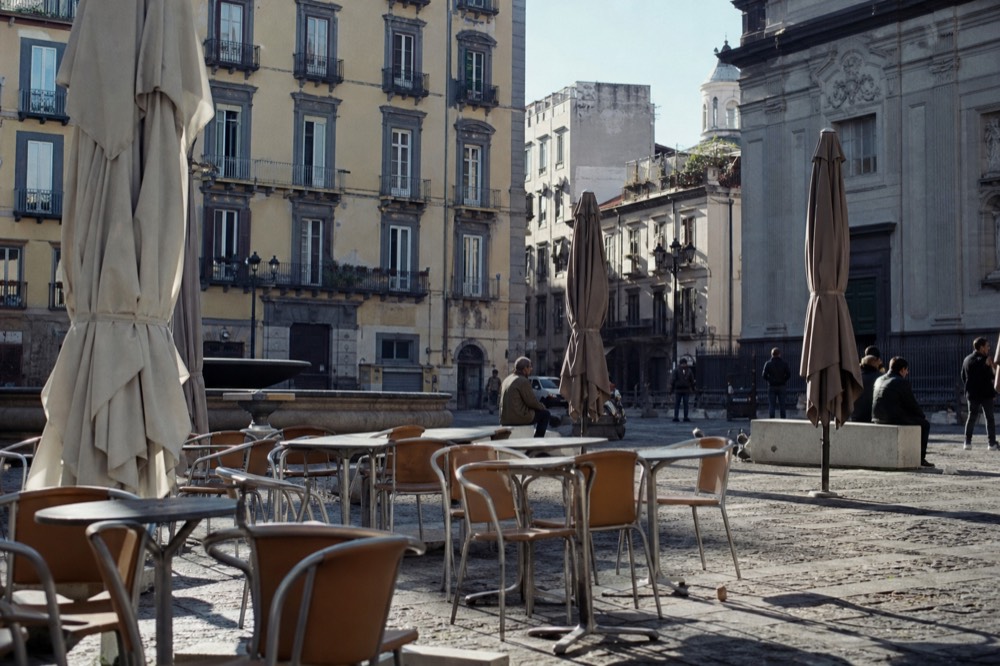
The pressure is real and it is growing. Naples logged roughly 15 million tourist stays in 2025, about 4% up on the year before, and the city has been openly weighing the benefits against the strain that comes with numbers like that. Where the crowds are thickest, near the port and the headline piazzas, prices climb hardest.
Two more line items belong in your budget rather than your suspicion. Accommodation carries a tourist tax of €4.00 to €6.00 per person per night in 2026, set by the class of the property. And the markets, where locals actually shop, price differently from the tourist lanes: Pignasecca and the city's markets are the honest benchmark.
Can You Really Eat Well In Naples For €12 To €15 A Day?
Yes, and it is the standard local circuit rather than a stunt. A sfogliatella and espresso for breakfast, a portafoglio or a cuoppo at lunch, a frittatina in the afternoon and a babà to finish adds up to roughly €12 to €15, and comfortably under €20 even if you eat greedily.
The catch is knowing where to stand. Those prices hold at high-turnover counters in the historic centre and around the markets, and they quietly stop holding fifty metres later on a terrace with a view. Timing matters too: Attanasio opens around 6:30am and closes on Mondays, Friggitoria Vomero shuts on Sundays, and the market winds down in the early evening.
Doing it without a plan usually costs more, because you end up eating wherever you happen to be standing at 2pm. A self-guided eating route sequences the counters so the walking works, and it pairs well with the argument over the oldest pizzeria in Naples if you want a history stop in the middle of the day.
A guide can handle the route and ordering on day one, leaving you to revisit favourite stops independently. The Piazza Bellini walk lasts two and a half hours and includes several local snacks.
What Do Tours And Classes Cost Against That?
A guided walk costs more than buying a few street snacks yourself. The useful comparison is what the premium buys: a guide, help ordering, food explanation and the listed tastings. Use the calculator below with a current quote for your own party.
Compare the included food and guide time with what you would actually buy yourself. A six-stop market walk is a different purchase from a quick folded pizza. Use a quote for your date and party size; cancellation terms belong to the option you book. Related reading: street food walking tours.
Either way the pizza itself stays cheap. That is the part Naples has never let go of, and the tours we compare are built around the same rule: eat where the queue is local and the price is €2.
Choose Your Naples Experience
Pignasecca Market And Six Tastings. Explore the working market with a guide, from folded pizza and a seafood cone to a sweet finish. Have a date in mind? Check it before arranging the rest of your Naples day.
120 minutes. Meet outside San Liborio church, Piazza Carità 12. Select the vegetarian option when needed. Food and drinks listed in your chosen option are included; extra orders are separate. A market walk, not a shopping-and-cooking class.
Choose a date to see scheduled departures. Final availability and price are confirmed on Viator.
No verified experience fits those requirements. Adjust your choices, or keep the independent plan described above.
Compare Options And Fit Your Plans
General recommendation until you choose. Confirm the exact option, meeting point, inclusions and dietary arrangements when booking. A food walk does not promise a visit to a particular celebrity pizzeria. Allow travel time on top of the activity duration.
- Historic Centre Street Food Walk: 150 minutes. Taste fried pizza, mozzarella and Neapolitan pastries while an English-speaking guide connects the old streets. Meet by the Greek ruins in Piazza Bellini; follow your confirmation if meeting details change. 2.5 hours walking and standing; seats are not guaranteed. Vegetarian requests need advance notice; no vegan, gluten-free or dairy-free diets. Extra drinks cost extra.
- Pizza And Tiramisù Cooking Class: 180 minutes. Knead, shape and top a margherita, make tiramisù, then eat your creations with a drink. Meet at Via delle Zite 30. Ingredients and tools are provided; transfers are excluded. Under-18s need a parent or legal guardian. Dietary substitutions beyond the listed marinara option need operator confirmation.