AVPN And STG Rules: What Your Class Pizza Must Follow
Updated November 3, 2026
Two rulebooks govern pizza napoletana, and both say the same hard things: a dough ball of 180 to 280 grams, an oven near 485C, and a bake that lasts 60 to 90 seconds.
Short answer
Pizza napoletana is defined by two official specifications. AVPN requires 200 to 280 gram dough balls, a wood-fired oven at 430 to 480C, and a 60 to 90 second bake. The STG rules are close: 180 to 250 gram balls, an oven floor near 485C, the same bake window.
Pizza napoletana is not a style, it is a specification. Two rulebooks govern it: the AVPN disciplinare, written by the Associazione Verace Pizza Napoletana and published in full at pizzanapoletana.org, and the EU's STG designation, whose numbers are summarized at the pizza STG reference page. Both fix the dough weight, the oven temperature, and the bake time, and both are why a pizza class in Naples feels like a controlled experiment rather than a craft hour. This page lays out the exact numbers and explains what they change about the pizza you will make.
What Makes A Pizza Truly Neapolitan?
A pizza napoletana is a round pie of at most 35 centimeters, raised at the edge by 1 to 2 centimeters of blistered cornicione, baked only in a wood-fired oven at 430 to 480C for 60 to 90 seconds, from a dough of wheat flour, water, salt, and yeast that has risen between 8 and 24 hours. Those are the AVPN's own lines, not a chef's opinion, and the art behind them was inscribed by UNESCO in 2017 as the Art of the Neapolitan Pizzaiuolo.
The specification is unusually specific for a food. Flour to water is set at 1,600 to 1,800 grams of flour per liter of water, with 40 to 60 grams of salt and as little as 0.1 to 3 grams of fresh yeast per batch. The dough is worked until compact, cut by hand into balls using the staglio technique, and left for a second proofing in boxes. Toppings follow the same logic: hand-crushed peeled tomatoes, fior di latte or buffalo mozzarella, basil, and olive oil, with the tomato-mozzarella combination we now call Margherita traceable to a documented 1889 royal service at Brandi, even though the topping pairing itself predates that visit.
For background on how that fame compounded into a world heritage food, the companion piece Why Is Napoli Pizza So Famous? covers the history in detail. The short version: the rules made the pizza reproducible, and reproducibility is what made it travel.
The AVPN Rules: Dough, Rise, And The Disciplinare
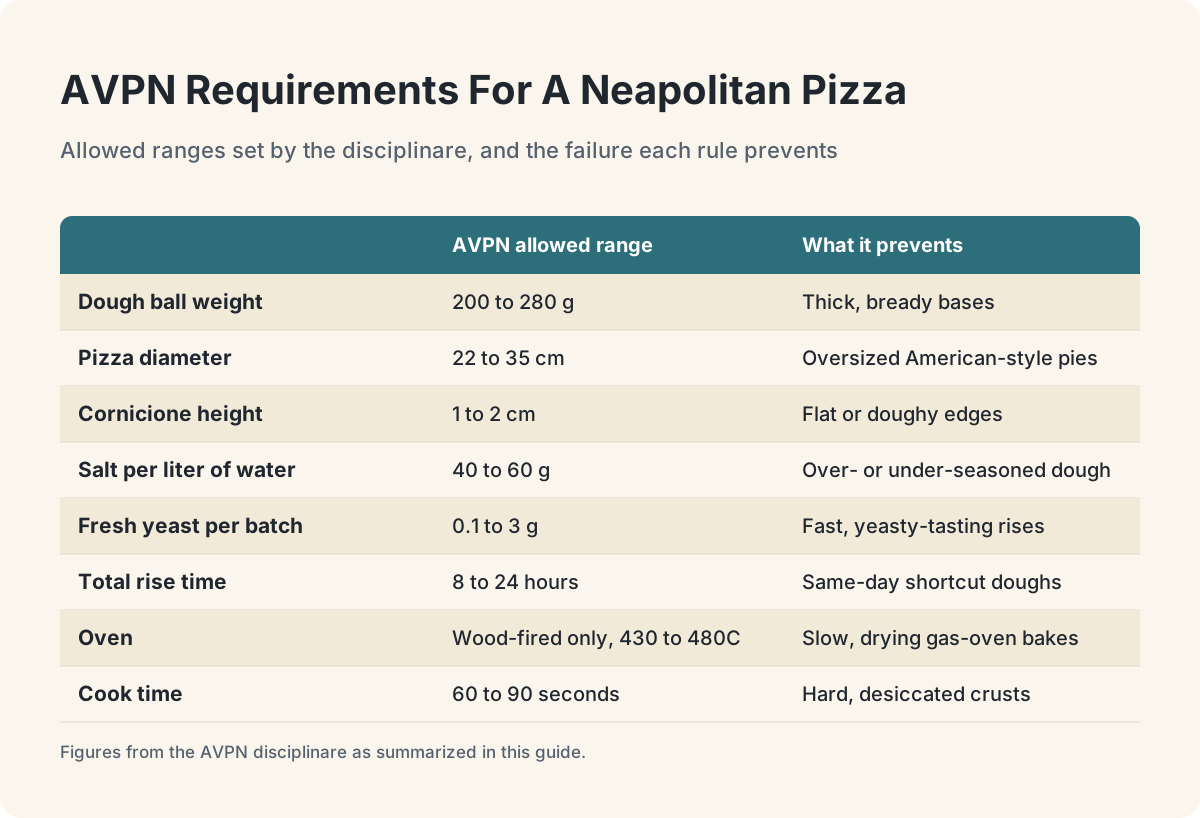
The AVPN disciplinare sets dough balls at 200 to 280 grams for pizzas of 22 to 35 centimeters, total rise time at a minimum of 8 and a maximum of 24 hours, and the oven exclusively wood-fired at 430 to 480C, where the pizza cooks in 60 to 90 seconds. Founded in 1984, the association now counts roughly 600 certified pizzerias worldwide, with about 120 of them in North America.
The point of the disciplinare is protection, not perfection. It exists so that a pizzeria in another country cannot stretch a thick-crusted pie, char it slowly in a gas oven, and sell it as Neapolitan. Every clause answers a specific failure mode: the minimum rise stops shortcuts that taste of raw yeast, the ball weight stops thick bases, the oven floor temperature and 60 to 90 second window stop drying. The dough, per the official recipe page, must be soft and fragrant, never cracker-like, and the cornicione must be swollen without burns.
| AVPN requirement | Allowed range | What it prevents |
|---|---|---|
| Dough ball weight | 200 to 280 g | Thick, bready bases |
| Pizza diameter | 22 to 35 cm | Oversized American-style pies |
| Cornicione height | 1 to 2 cm | Flat or doughy edges |
| Salt per liter of water | 40 to 60 g | Over- or under-seasoned dough |
| Fresh yeast per batch | 0.1 to 3 g | Fast, yeasty-tasting rises |
| Total rise time | 8 to 24 hours | Same-day shortcut doughs |
| Oven | Wood-fired only, 430 to 480C | Slow, drying gas-oven bakes |
| Cook time | 60 to 90 seconds | Hard, desiccated crusts |
The three classes above are the ones where these numbers get taught rather than skipped. Between them they cover the classic dough-and-tiramisu format, a by-the-sea version with unlimited wine, and a pizza-and-gelato pairing, all inside the 2 to 3 hour window that dominates the city's class market. Full pricing and teacher comparisons for every option in the city are laid out in Naples Pizza Making Classes: Prices, Teachers, And What You Bake.
The STG Numbers: 485C, 60 To 90 Seconds, 180 To 250 Grams
The STG rules, the EU's Traditional Speciality Guaranteed registration for Neapolitan pizza, set the dough ball at 180 to 250 grams and the oven floor at roughly 485C, with the bake at 60 to 90 seconds, numbers that overlap but do not exactly match the AVPN's 200 to 280 gram balls and 430 to 480C oven. The two rulebooks agree on everything that matters at the counter: fast, hot, light.
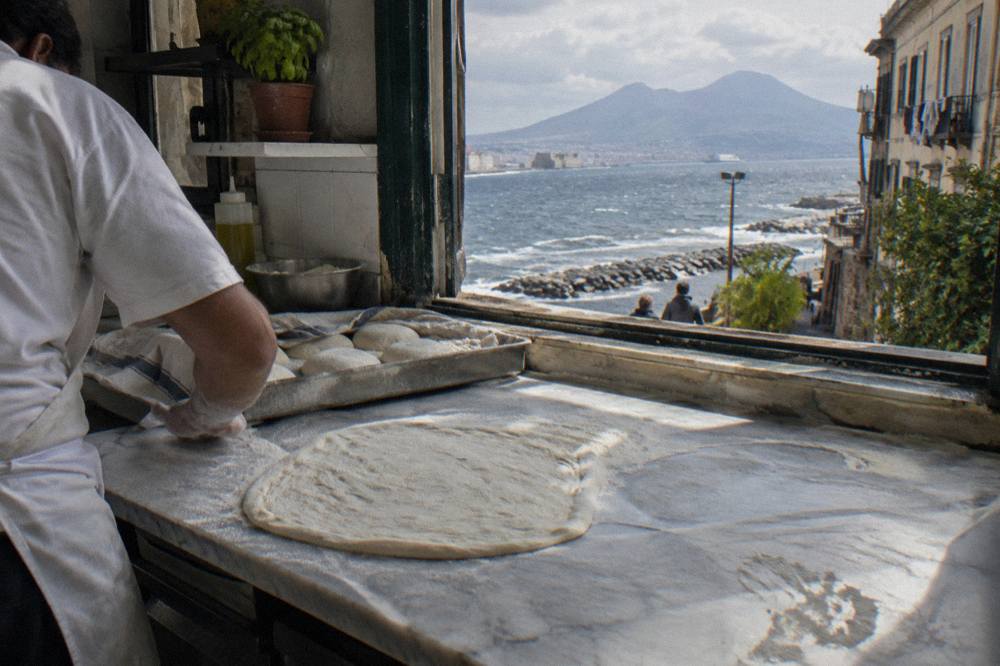
The weight gap is smaller than it looks. A 180 gram ball and a 280 gram ball are both single-serving pizzas once baked; the STG simply tolerates a slightly smaller pie at the low end. Where a class is concerned, most kitchens work somewhere in the middle of the two ranges, and several operators say so plainly. Esperi's historic-center class, described at esperi.it, runs the standard 2 to 3 hour format with group sizes usually between 10 and 15 people, some larger.
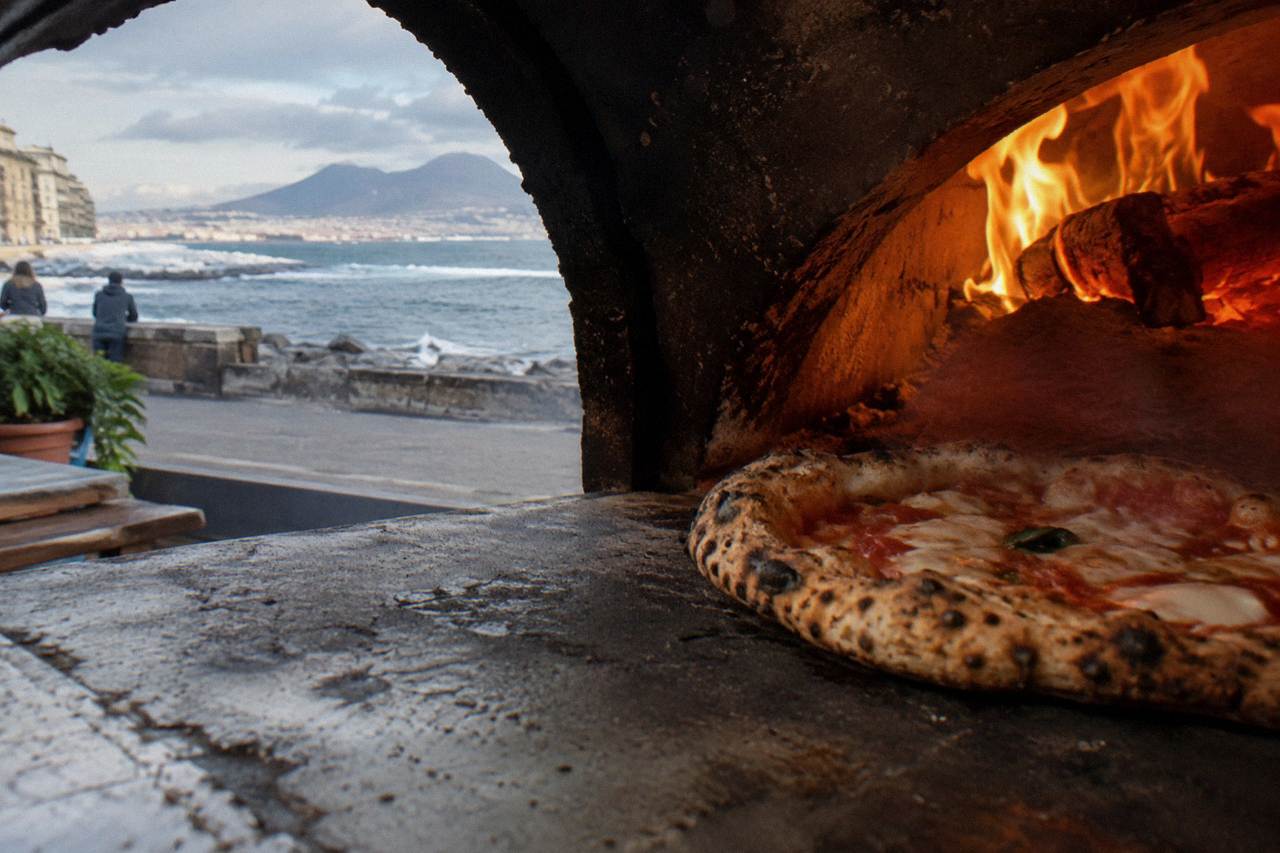
The clock is the part that surprises first-time students. Sixty to ninety seconds is less time than it takes to describe what is happening. The oven floor does most of the work, the pizzaiolo turns the pie once or twice with a peel, and the leopard-spotting on the cornicione, the charred blisters people photograph, is a direct product of that temperature and that speed, not of leaving the pizza in longer.
Booking logistics matter as much as the rules here. Class slots cluster around 11:00 or 12:00, 17:00 or 18:00, and 20:00, and the practical guidance at happytovisit's booking guide is to reserve 3 to 7 or more days ahead between June and September, and to note that some kitchens set a minimum of 2 participants in high season from April to October and 4 in the November to March window. Children under 18 attend accompanied, some operators set a minimum age around 6, and a completion certificate is often included.
Why The Pizza You Make In Class Is Different
A class pizza differs from a pizzeria pizza at one stage only: the dough is usually prepared in advance to the correct weight and rise, because an 8 to 24 hour rise cannot fit inside a 2 to 3 hour class, so you typically stretch, top, and bake a dough the kitchen made the day before. Everything from the peel onward, the 485C floor, the 60 to 90 second bake, the single turn, is identical to the professional workflow.
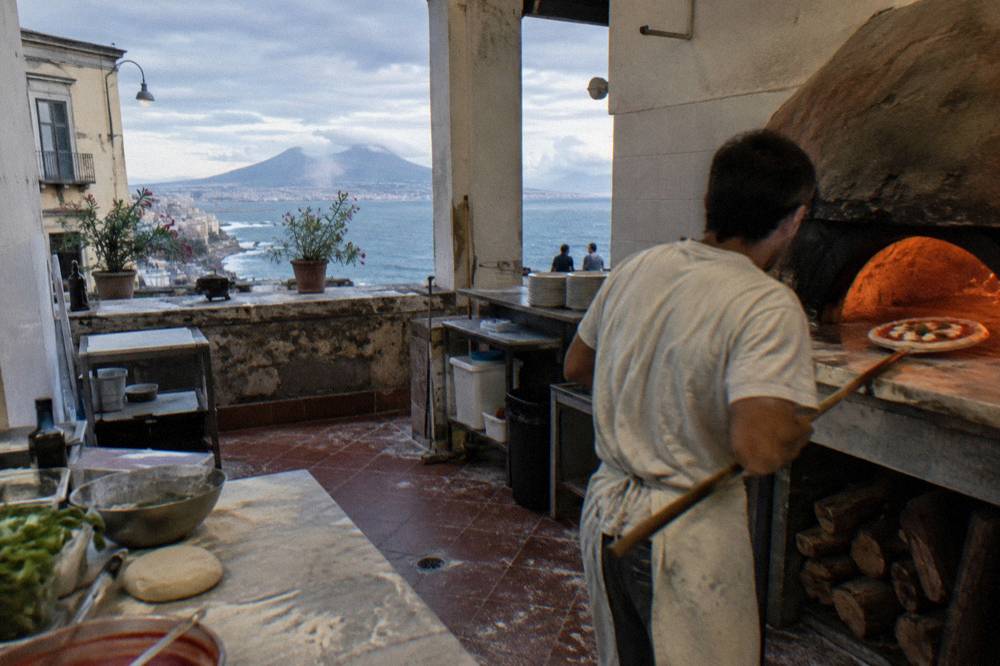
That division of labor is not a shortcut, it is physics. Dough mixed at 10:00 for a class at 17:00 has risen for seven hours at best, under both rulebooks' minimum. Good classes are explicit about this: you learn the mixing ratios and the theory, then you practice on dough that has already completed its proof. The best sign of a serious kitchen is that it tells you the ball weight before you touch it.
The differences narrow further if you compare formats. A pizza-and-tiramisu class such as the Pizza and Tiramisu class by the sea splits its two hours between the dough station and the dessert, so each skill gets less repetition. A pizza-and-gelato pairing makes the same trade in a different direction. The single-focus, three-hour format of the official class gives the most oven minutes per student, which matters when the bake itself lasts 90 seconds and you only get a handful of turns with the peel.
How To Judge Whether A Class Follows The Rules
Ask three questions before booking, and insist on numbers rather than adjectives: does the class state its dough ball weight, does it bake in a wood-fired oven, and does every student stretch and top their own pizza from a proved ball? A kitchen that answers with figures, 200 to 280 grams, 430 to 480C, is teaching the disciplinare; one that answers with vague praise is teaching a pizza party.
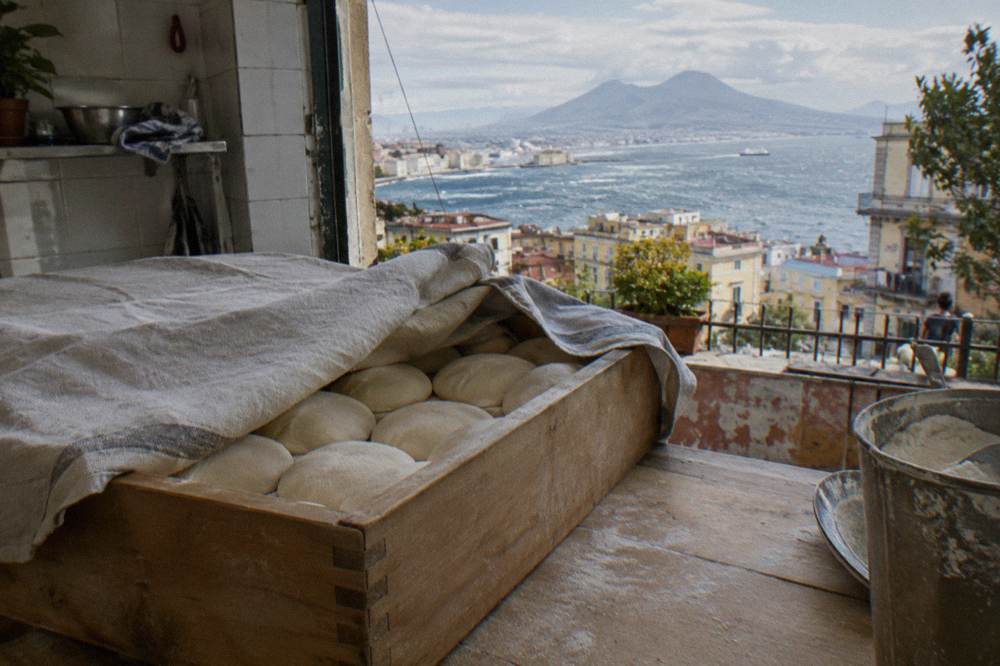
A few concrete markers separate the formats on offer across the city, using the figures each listing publishes:
| Class format | Bookable example | Duration | Price | Rating |
|---|---|---|---|---|
| Pizza plus tiramisu, official format | Official pizza making class with tiramisu | 3 hours | from $43 per person | 4.9 across 3,724 reviews |
| Pizza plus tiramisu, by the sea | Pizza and Tiramisu class by the sea | 2 hours | from $67 per person | 4.7 across 1,018 reviews |
| Pizza plus gelato | Pizza and gelato making class | 2 to 3 hours | from $46 per person | 4.8 across 506 reviews |
Families should weigh two extra factors: the 485C oven and the late-evening slots. The dedicated rundown at Naples Pizza Class With Kids: Ages, Ovens, Timing works through minimum ages, supervision near the oven mouth, and which time slots suit children, since the 20:00 starts run past most young bedtimes.
What The Rules Mean When You Bake At Home
You cannot fully replicate a pizza napoletana in a domestic oven, because the rules require a 430 to 485C wood-fired floor and a 60 to 90 second bake, and most home ovens top out well below that range, so the honest target is the dough, not the bake: correct ball weight, correct rise, correct stretching. Everything else in the disciplinare travels.
Take the ratios and leave the oven. One liter of water to 1,600 to 1,800 grams of flour, 40 to 60 grams of salt, and a scrap of fresh yeast, balled at 200 to 280 grams and proved 8 to 24 hours, will produce a dough that behaves like the one you stretched in Naples. Home bakers who have taken a class report the same takeaway on the pizza subreddit: the technique is learnable, the bake is the part you cannot copy, and quality between classes varies more than the dough recipes do. The certificate many classes hand out is a souvenir; the ratios are the takeaway.
One correction classes routinely make to self-taught bakers is stretching rather than rolling. A rolling pin crushes the gas cells built up over hours of proving, and the swollen cornicione the rules demand depends entirely on those cells surviving until the oven. Hand-stretching from the center outward, leaving the last two centimeters of the rim untouched, is the single habit most worth carrying home, and it is the one every format on Naples Food Tours, from the official class to the gelato pairing, drills first.
Common Questions About AVPN And STG Pizza Rules
What makes it Neapolitan?
Under the AVPN disciplinare, a pizza napoletana is a 22 to 35 centimeter round with a 1 to 2 centimeter blistered cornicione, made from a dough of flour, water, salt, and yeast proved 8 to 24 hours, and baked in a wood-fired oven at 430 to 480C for 60 to 90 seconds. The STG registration states the same idea with slightly different numbers: 180 to 250 gram dough balls and an oven floor near 485C.
Is AVPN the same as STG?
No. AVPN is a private association's disciplinare, founded in 1984, enforced through its member certification of roughly 600 pizzerias. STG is an EU Traditional Speciality Guaranteed registration that protects the name at law across Europe. The numbers overlap: both specify a 60 to 90 second bake, but AVPN allows 200 to 280 gram balls at 430 to 480C while STG allows 180 to 250 gram balls near 485C.
Why does a Neapolitan pizza cook in 60 to 90 seconds?
Because the oven floor sits at 430 to 485C. At that temperature the base cooks through by conduction in about a minute while the rim sets and blisters from the oven's radiant heat. A cooler oven needs more minutes, and more minutes dry the dough out, which is exactly what the rules exist to prevent.
Do Naples pizza classes follow the AVPN rules?
The good ones teach to them. Classes cannot fit an 8 to 24 hour rise inside a 2 to 3 hour session, so kitchens prepare the dough in advance, and students typically stretch, top, and bake a proved ball in a wood-fired oven at the correct temperature. Ask whether the class states its dough ball weight and oven type before booking; that answer separates the rule-followers from the pizza parties.
How heavy is a Neapolitan pizza dough ball?
The AVPN disciplinare specifies 200 to 280 grams for a 22 to 35 centimeter pizza. The STG rules specify 180 to 250 grams. Most class kitchens work in the overlap between the two ranges, and the best state the weight before you begin stretching.