Naples Pasta Cooking Class: What You Make And Eat
Updated November 3, 2026
A pasta cooking class in Naples runs 2 to 3 hours, costs from $54 per person with wine included, and sends you home able to shape pasta by hand.
Short answer
The main restaurant-based class in Naples, run by Cooking Italy, lasts 2 to 3 hours and costs from $54 per person, rated 4.8 across 173 reviews. You make pasta dough from scratch, shape it by hand, prepare tiramisu, then sit down and eat what you cooked with wine included.
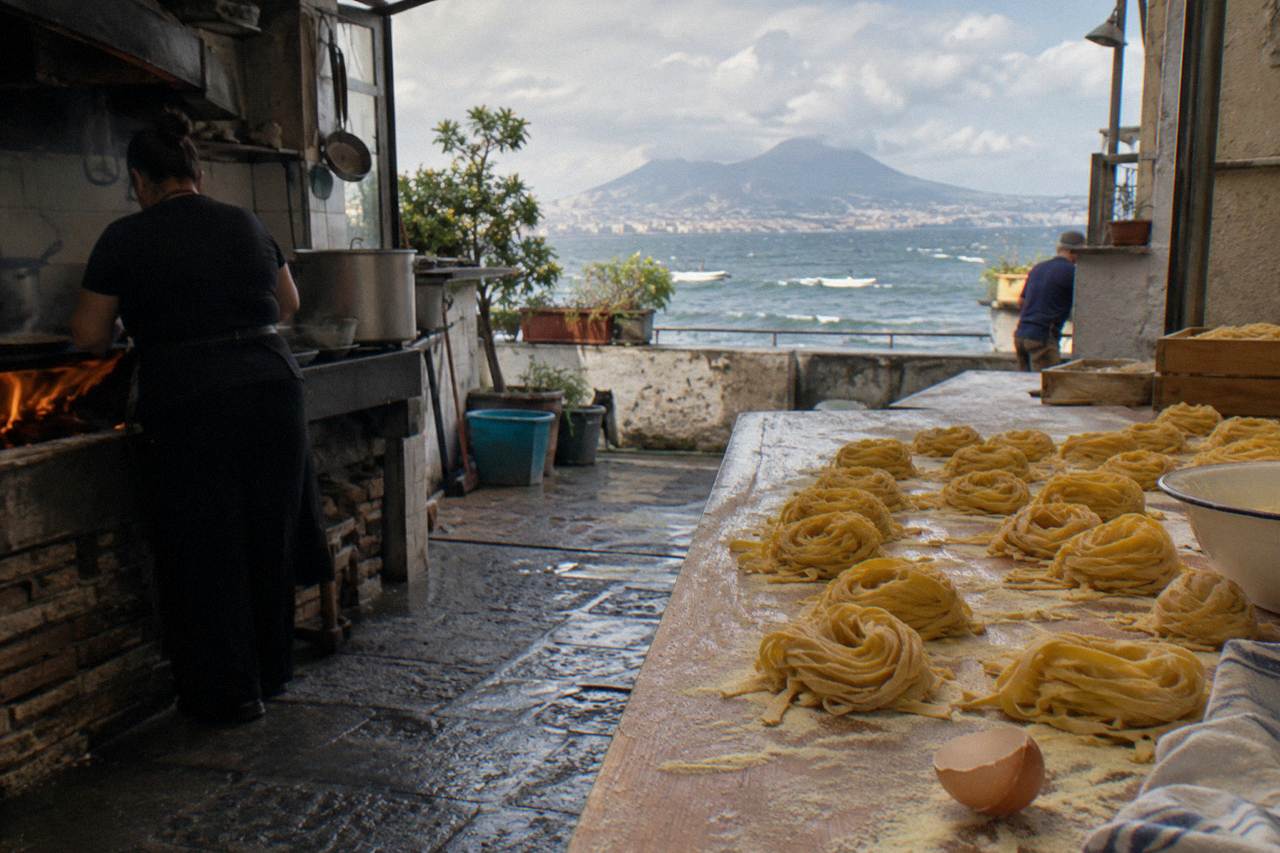
A Naples pasta cooking class is the city's quieter hands-on alternative to pizza school, and the flagship version costs from $54 per person for a 2 to 3 hour session at a working restaurant, run by Cooking Italy and rated 4.8 across 173 reviews. You knead egg dough by hand, shape it into the styles Naples actually eats, assemble a tiramisu while the pasta rests, and then sit at a table with wine and eat everything you made. Pizza classes outnumber pasta classes in this city by a wide margin, which is exactly why the pasta option deserves its own look before you book anything.
What Dishes Do You Make In A Naples Pasta Cooking Class?
The class centers on two products: fresh egg pasta, which you mix, knead, roll and cut yourself, and tiramisu, which you assemble from mascarpone, espresso and savoiardi while the dough rests. You finish by cooking and eating your own pasta at a restaurant table, with wine served during the meal. Nothing pre-made is handed to you, the dough starts as flour and eggs.
The format matters more than the menu. Naples is a pizza city first, so pasta teaching here leans on the home-cooking tradition rather than a certified rulebook, unlike pizza, where dough balls of 180 to 250 g and oven floors around 485C are written into official standards. The pasta side is looser, more personal, and taught the way a Neapolitan family cook would teach it: flour on a board, eggs in a well, hands doing the work.
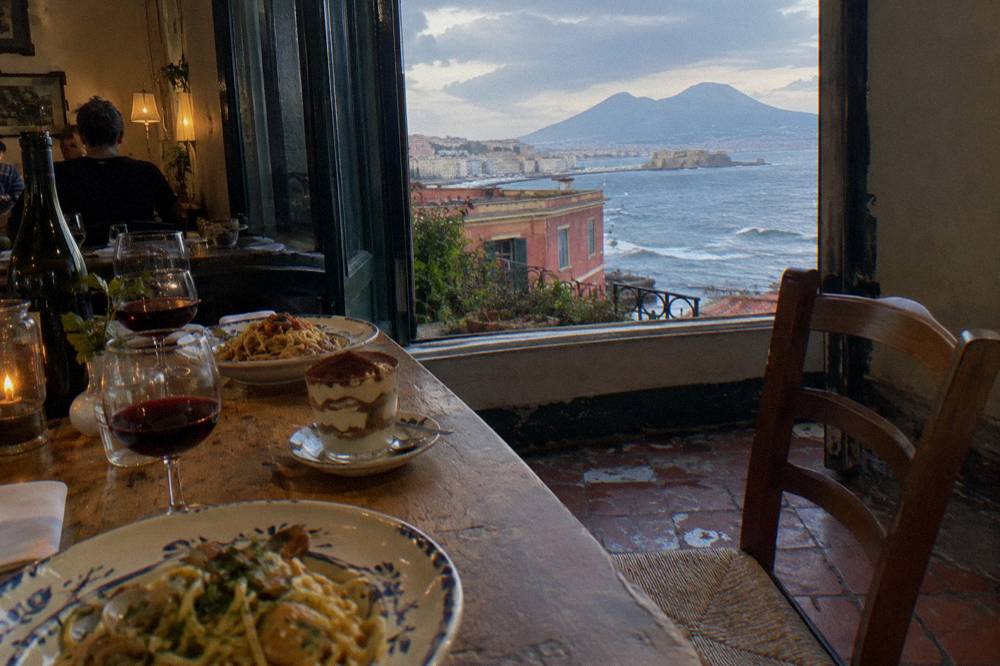
The eating is part of the lesson. Once your pasta is cut, it goes straight into the pot and onto your plate, and a glass of wine comes with the meal. That restaurant setting is what separates this class from studio-based lessons: you are cooking in a functioning dining room, not a converted classroom.
Here is what a typical session covers, dish by dish:
| Stage | What You Do | What You Get To Eat |
|---|---|---|
| Dough | Mix flour and eggs, knead by hand, rest the dough | Nothing yet, this is the base |
| Shaping | Roll and cut the sheet into hand-shaped pasta styles | Your own pasta, cooked to order |
| Tiramisu | Layer mascarpone cream, espresso-soaked savoiardi, cocoa | Tiramisu, chilled during class |
| Meal | Sit at the restaurant table | Your pasta plus wine |
How Much Does A Pasta Class Cost Compared To A Pizza Class?
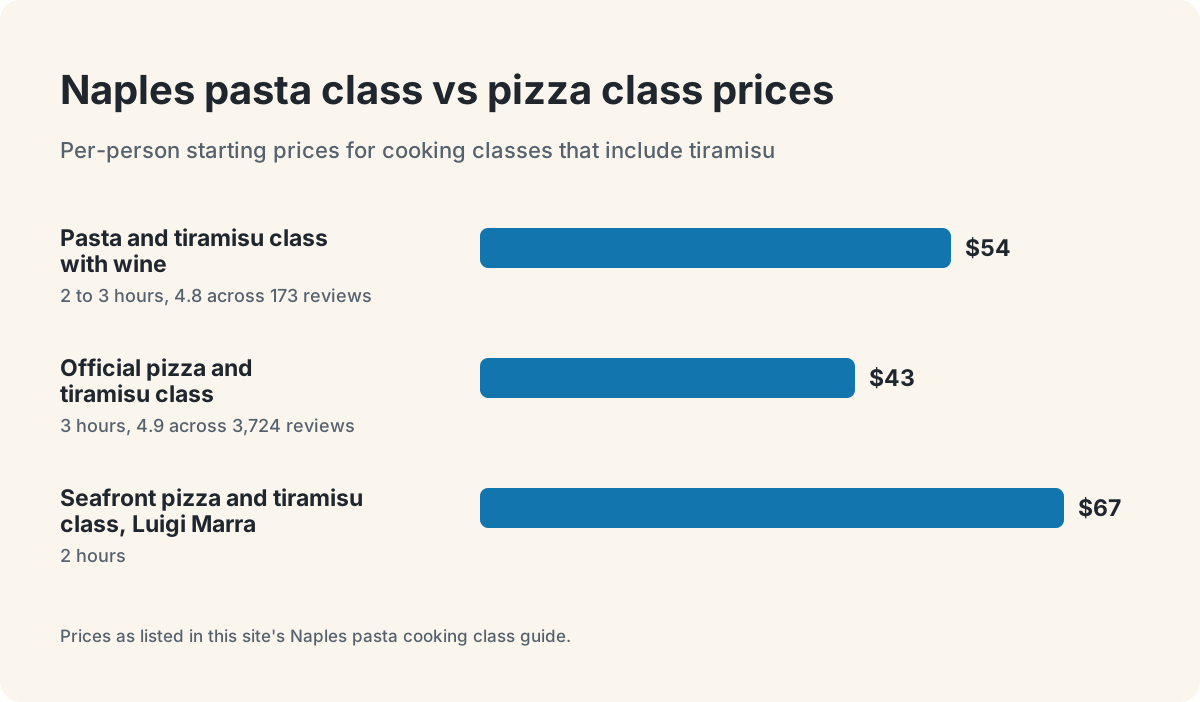
The pasta and tiramisu class with wine costs from $54 per person for 2 to 3 hours. Naples pizza classes undercut it: the official pizza and tiramisu class starts at $43 per person for 3 hours, and the seafront pizza and tiramisu class by Luigi Marra runs $67 for 2 hours. All three include eating what you make, so price differences come down to venue, drinks and group size.
Put side by side, the pricing logic becomes clear. Pizza classes benefit from scale, the most-booked one in the city carries a 4.9 rating across 3,724 reviews, which lets the operator hold the $43 entry price. The pasta class is a smaller operation at a restaurant, rated 4.8 across 173 reviews, and the wine service is folded into the ticket. The Luigi Marra class sits between the two on price and adds a seafront location.
If you are weighing the two formats, the comparison guide to Naples Pizza Making Classes: Prices, Teachers, And What You Bake breaks down the pizza side in detail, including which classes include tiramisu or gelato alongside the pizza. One practical difference: pizza classes end with a wood-fired bake measured in seconds, while a pasta class ends with a sit-down meal that runs at a gentler pace. Booking windows are similar for both, and the general advice to reserve 3 to 7 or more days ahead in the June to September peak applies to pasta classes too, per the booking guidance at happytovisit.com.
What Actually Happens During The Class, Step By Step?
Plan on three phases across 2 to 3 hours: roughly 45 to 60 minutes of dough work, another stretch for rolling, cutting and tiramisu assembly, and the final stretch at the table eating your pasta with wine. The whole session happens inside a restaurant, you cook where the staff cooks. No pickup is offered, you make your own way to the venue.
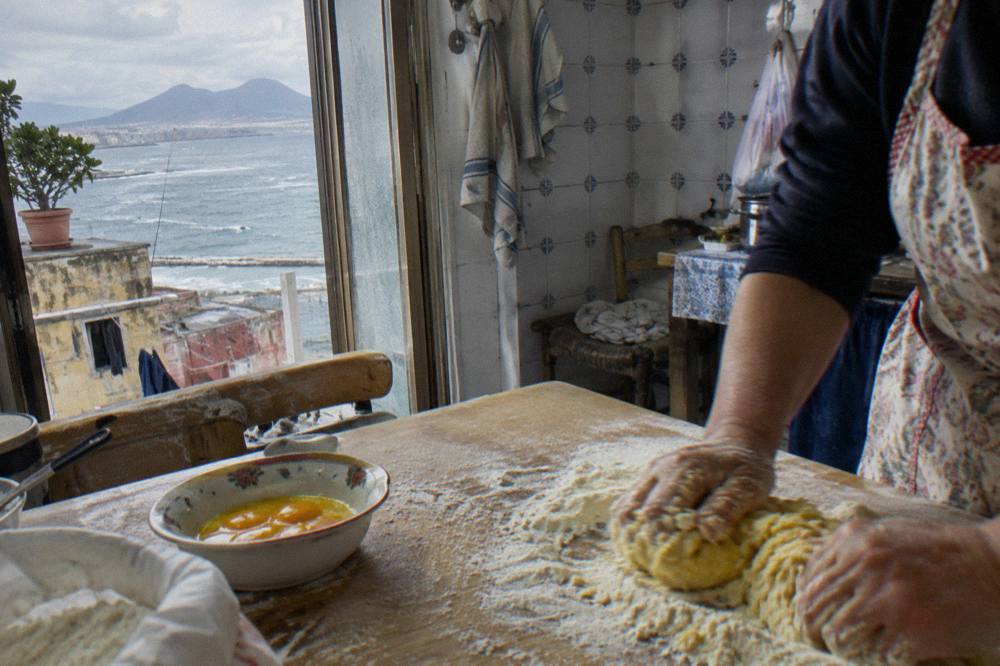
The dough phase is the heart of it. Eggs go into a well of flour, and you work them together by hand until the mass holds, then knead it smooth. There is no machine doing the hard part for you. While the dough rests, the class shifts to tiramisu: mascarpone cream whipped, savoiardi dipped in espresso, layers built in individual portions so everyone takes their own through the rest of the session.
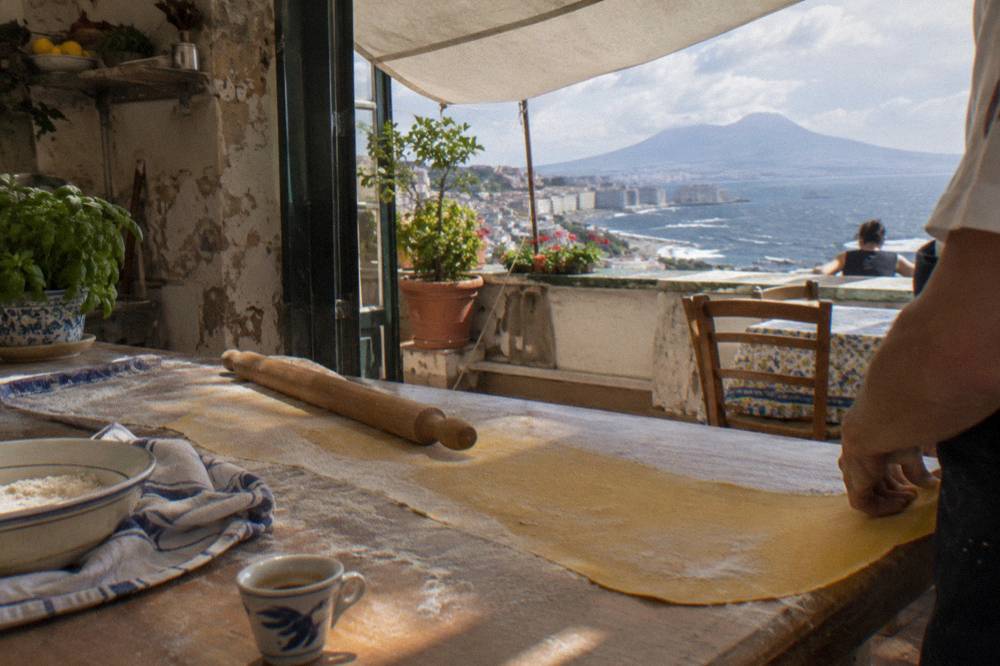
Rolling comes next, and it is the skill that surprises people. A pasta sheet has to be thin enough to read through, and getting there with a rolling pin takes real effort the first time. The cutting follows, into ribbons wide or narrow depending on the shape of the day. Then the pot, the plate, and the meal.
That structure, demo-light and hands-on-heavy, matches what cooking schools in the historic center describe for their own classes, where sessions of this length typically run in groups of 10 to 15 participants per the program notes at esperi.it. The pasta class follows the same rhythm: short instruction, long practice, and a shared meal as the finish.
Do You Need Cooking Experience To Join?
No prior cooking skill is needed. The dough technique is taught from zero, the instructor demonstrates each step before you repeat it, and the pasta shapes used in class are chosen because they are forgiving for first-timers. The only real requirements are the ability to stand and work for a couple of hours and an appetite at the end.
The pacing assumes beginners. Kneading has a feel that takes a few minutes to pick up, and the instructor corrects by hand, adjusting your pressure or adding flour when the dough is too sticky. Cutting uneven ribbons is not a failure, uneven widths are how hand-cut pasta looks, and the cooking step forgives a lot.
Dietary needs are worth flagging at booking rather than on arrival. Vegetarian arrangements are usually straightforward for a pasta class since the classic preparations are cheese and tomato based, but vegan and gluten-free versions are limited by the egg-and-wheat foundation of fresh pasta itself. State the requirement when you book, not at the door, so the kitchen can plan.
Can Children Join A Pasta Cooking Class In Naples?
Children can generally join cooking classes in Naples, with under-18s accompanied by an adult and some operators setting a minimum age around 6. Pasta is arguably the better family pick than pizza, since there is no wood-fired oven floor at roughly 485C in play, the same surface a pizza class bakes on in 60 to 90 seconds. Check the specific age policy before booking.
The safety picture differs between formats. A pizza class puts children near a live wood-fired oven where the bake happens in under two minutes at extreme heat, a manageable but real consideration with young kids. A pasta class keeps everyone at the workbench and the dining table. The oven standard behind pizza classes, from the STG rules summary, is exactly what makes that format thrilling and slightly more demanding for parents.
For families weighing both, the guide to Naples Pizza Class With Kids: Ages, Ovens, Timing covers age minimums and session timing in detail. A certificate is often included at the end of Naples classes, which lands well with younger cooks, and many children find rolling dough more engaging than watching a 90-second bake they cannot control.
Pasta Class Or Pizza Class: Which One Fits Your Trip?
Pick the pizza class if you want Naples' signature craft at its source, a 4.9-rated session from $43 where you bake in a wood-fired oven. Pick the pasta class if you want a slower meal, wine at the table, and a skill, fresh egg pasta, that transfers directly to your home kitchen. Both include tiramisu, so that course should not decide it.
The decision usually comes down to what you want to reproduce at home. Few travelers build a 485C wood-fired oven in the backyard; every traveler owns a rolling pin or can buy one for a few dollars. Pizza class is about witnessing the craft in its native environment, governed by rules laid out by the Associazione Verace Pizza Napoletana on pizzanapoletana.org. Pasta class is about acquiring a repeatable technique.
| Factor | Pasta Class | Pizza Class |
|---|---|---|
| Entry price | From $54 per person | From $43 per person |
| Duration | 2 to 3 hours | 3 hours |
| Rating | 4.8 across 173 reviews | 4.9 across 3,724 reviews |
| Dessert included | Tiramisu | Tiramisu |
| Wine with meal | Yes | Varies by class |
| Skill you keep | Hand-rolled egg pasta | Dough and oven technique |
If you cannot choose, some travelers split the difference with a food tour instead, letting a guide cover the city's pizza, fried food and pastries in one walk. The deeper comparison of formats, including the tasting route option, is laid out in AVPN And STG Rules: What Your Class Pizza Must Follow, which explains the standards your pizza class instructor is teaching against. This Naples Food Tours page is part of that wider cluster, and the pasta class page for the pasta and tiramisu class with wine carries the full inclusions list.
Common Questions About A Naples Pasta Cooking Class
What dishes do you make in a Naples cooking class?
Two dishes from scratch: fresh egg pasta, mixed, kneaded, rolled and cut by hand, and a classic tiramisu assembled during the dough's resting period. You then eat the pasta at a restaurant table with wine included in the session.
How much does a pasta cooking class in Naples cost?
The restaurant-based pasta and tiramisu class with wine costs from $54 per person and runs 2 to 3 hours. Pizza-based classes in the city start lower, from $43 per person, so the pasta format sits mid-range among hands-on cooking options.
Is a pasta class or a pizza class better in Naples?
Pizza classes are the city's signature and carry the largest review pools. A pasta class suits travelers who want a sit-down meal pace, wine with the food, and a technique they can reproduce at home without a wood-fired oven.
Do you need cooking experience for a pasta class?
No. The dough technique is taught from zero, each step is demonstrated before you repeat it, and the shapes used are chosen to be forgiving for beginners. Appetite matters more than skill.
Can kids join a pasta cooking class in Naples?
Generally yes, with under-18s accompanied by an adult and some operators setting a minimum age around 6. Confirm the age policy on the operator's live listing for the specific date you want.