Naples Coffee And Pastry Guide: Caffe, Sfogliatella, Babà
Updated November 3, 2026
Naples runs on short coffee and warm pastry. This guide covers what to order at the bar, the classic sweets by name and price, and the neighborhoods where both are best.
Short answer
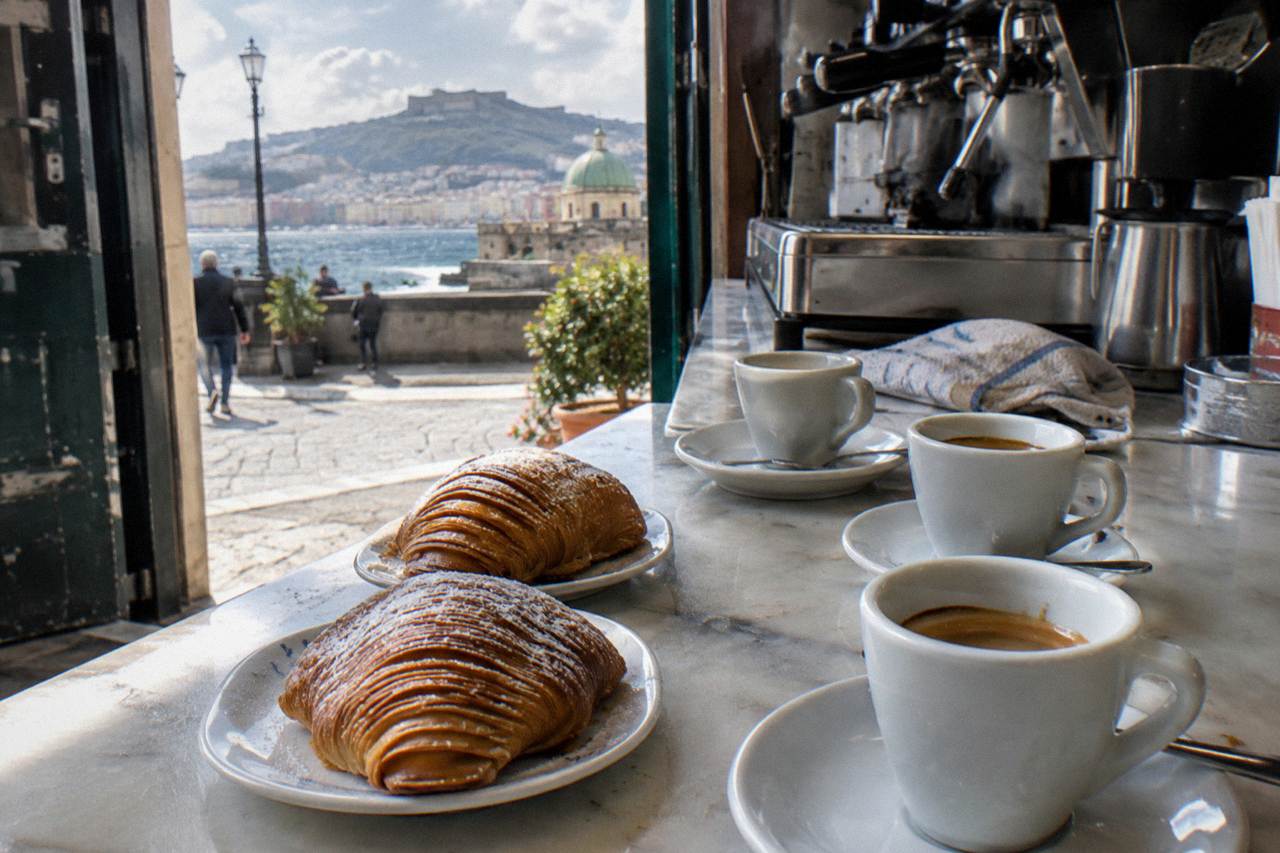
Order espresso standing at the bar, drink it in a few sips, and pair it with a sfogliatella riccia at EUR 2 to 2.50 or a babà at EUR 2 to 3. Attanasio near the station and Scaturchio on Piazza San Domenico Maggiore are the benchmark stops, both open per their published hours.
Naples drinks its coffee standing up, fast, and mostly as a single espresso the city calls simply "caffè". The pastry case sitting beside the bar is not decoration: the sfogliatella, a shell-shaped ricotta pastry, and the babà, a rum-soaked yeast cake, are breakfast, mid-morning break and dessert in one culture. Reported prices put a sfogliatella riccia at EUR 2 to 2.50 and a babà at EUR 2 to 3, so the full ritual costs less than most guidebooks warn. This page covers what to order, where the benchmark pastry shops sit, and how coffee and sweets fit into a wider eating day, with more on the full plate in What To Eat In Naples: Every Classic Dish, What It Costs, Where It Is Best.
How Do You Order Coffee In Naples?
At the bar, in Italian, in one word: "un caffè" gets you an espresso, drunk standing at the counter in a few sips, usually without sitting down, because sitting often carries a service charge at table-service cafes. Cappuccino exists but belongs to the morning; ordering one after a meal marks you as a visitor faster than any accent. Pay first at the register in many bars, then hand the receipt to the barista.
The vocabulary is short and worth learning before the first stop. A "caffè" is a straight espresso. A "caffè macchiato" is espresso stained with a drop of milk. "Caffè shakerato" is espresso shaken with sugar and ice into a frothy summer drink. Neapolitans also drink "caffè alla nocciola", espresso with hazelnut cream, a local habit that spread from the city's historic bars. Milk-based drinks like cappuccino and caffè latte are morning orders, and the local assumption is that heavy milk after a full meal fights digestion.
The bar itself is the institution. A Neapolitan coffee bar at 8am is office workers, market porters and students all taking their espresso in roughly ninety seconds, often with a cornetto or a sfogliatella in the other hand. Counter service is the default price, and the transaction is quick enough that bars in the historic center handle a constant line. There is no need to plan a long sit-down visit unless you specifically want one.
What Should You Order At The Pastry Counter?
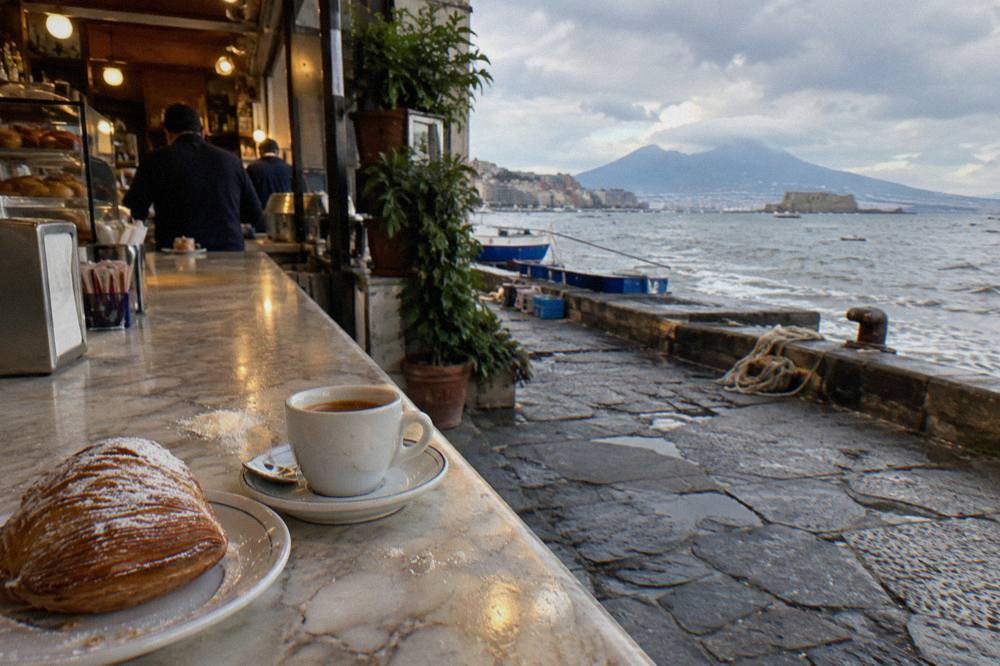
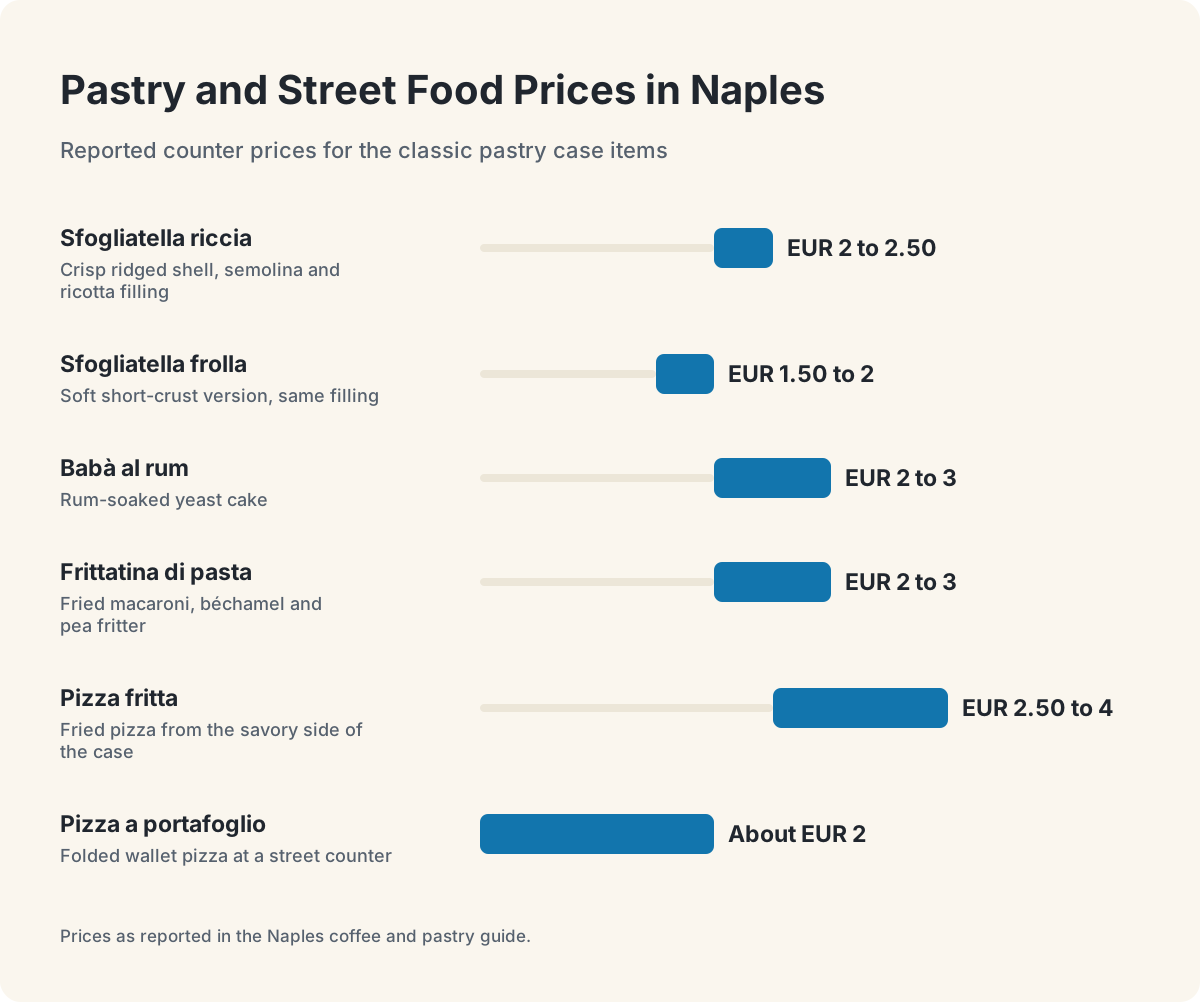
Two pastries define Naples: the sfogliatella and the babà. A sfogliatella riccia, the ridged crisp shell filled with semolina, ricotta, candied fruit and cinnamon, runs EUR 2 to 2.50, while the softer frolla version is around EUR 1.50 to 2. The babà, a small rum-soaked yeast cake, runs EUR 2 to 3, and a frittatina di pasta, a fried pasta fritter eaten as a savory counterweight, runs EUR 2 to 3.
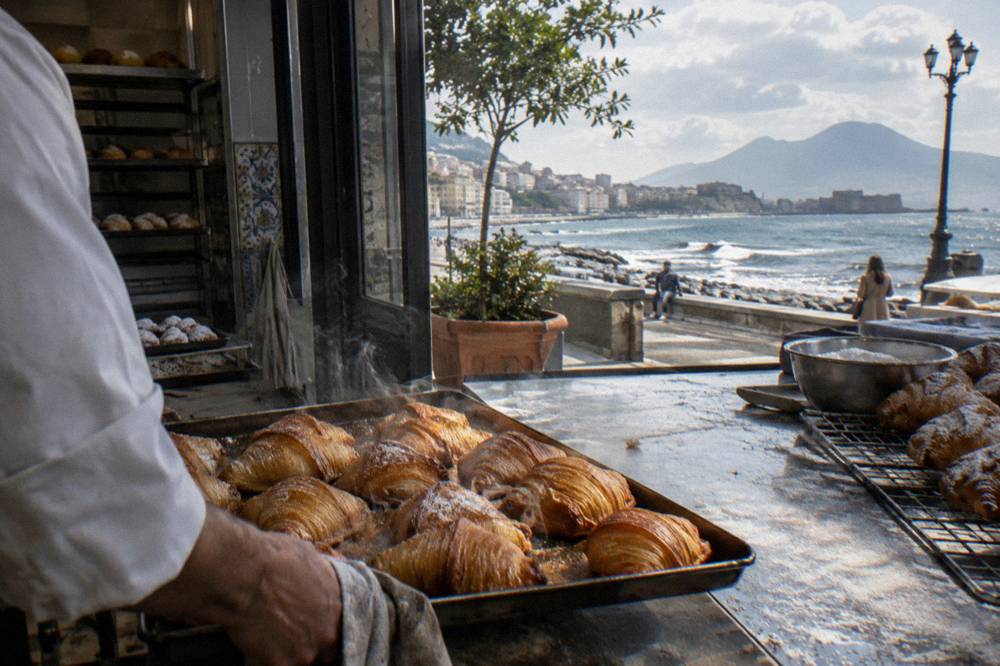
The sfogliatella split matters more than visitors expect. The riccia has dozens of paper-thin crisp layers that shatter on the first bite; the frolla is a short-crust cousin with the same filling. Locals argue about which is better and both are correct. The pastry is best hot from the oven, and shops that bake in waves through the morning will tell you when the next tray lands. The babà arrives soaked, often served in a small pool of rum, and is occasionally filled with cream or pastry cream at the fancier pasticcerie.
Around those two sit a supporting cast worth ordering. Sfogliatelle and babà appear beside taralli, the ring-shaped crackers sometimes glazed with pepper or almonds, and alongside the savory side of the case: pizza fritta at EUR 2.50 to 4, and the pizza a portafoglio, the folded wallet pizza, at about EUR 2 at Di Matteo's street counter on Via dei Tribunali. A reader planning a full day of eating will find those savory stops mapped in the self-guided walk, and for the pizza side of the city the prices are covered separately in How Much Does A Pizza Cost In Naples?, where a sit-down Margherita at the famous houses runs roughly EUR 4.50 to 12.
| Item | What it is | Reported price |
|---|---|---|
| Sfogliatella riccia | Crisp ridged shell, semolina and ricotta filling | EUR 2 to 2.50 |
| Sfogliatella frolla | Soft short-crust version, same filling | EUR 1.50 to 2 |
| Babà al rum | Rum-soaked yeast cake | EUR 2 to 3 |
| Frittatina di pasta | Fried macaroni, béchamel and pea fritter | EUR 2 to 3 |
| Pizza a portafoglio | Folded wallet pizza from a street counter | About EUR 2 |
Where Are The Best Coffee And Pastry Stops?
Attanasio, on Vico Ferrovia near Stazione Centrale, is the benchmark for hot sfogliatelle, open Tuesday to Sunday from about 6:30am to 7:30pm and closed Mondays. Scaturchio near Piazza San Domenico Maggiore is the historic babà house. Di Matteo on Via dei Tribunali sells its famous portafoglio from the counter daily from about 9am to midnight, the same shop where Bill Clinton stopped for folded pizza in 1994.
Attanasio bakes sfogliatelle in continuous batches, and the queue moves fast because the pastry is meant to be eaten within minutes of the oven. Scaturchio, a pasticceria with decades behind it, is the name most associated with the classic babà and a full case of pastries around Piazza San Domenico Maggiore. In the Materdei neighborhood, Starita, the pizzeria with a Margherita at roughly EUR 4.50 to 7.50 per its own site, is also a friggitoria where fried street food and coffee culture share the same room.
The historic center axis, Via dei Tribunali and Spaccanapoli, holds most of the names in one walkable line. Di Matteo's counter at Via dei Tribunali 94 fronts the pizzeria whose Margherita lists at about EUR 6.50 on delivery platforms, and its listed menu gives the current takeaway prices. Further along the coffee axis, Gino e Toto Sorbillo made news in October 2026 with a EUR 5 solidarity Margherita against rising costs, per Repubblica Napoli; its regular Margherita lists at EUR 7 and the marinara at EUR 5.50. For espresso-and-pastry specifically, plan the walk around Attanasio in the morning and the Tribunali counters midday.
Can You Build A Walk Around Coffee And Pastry?
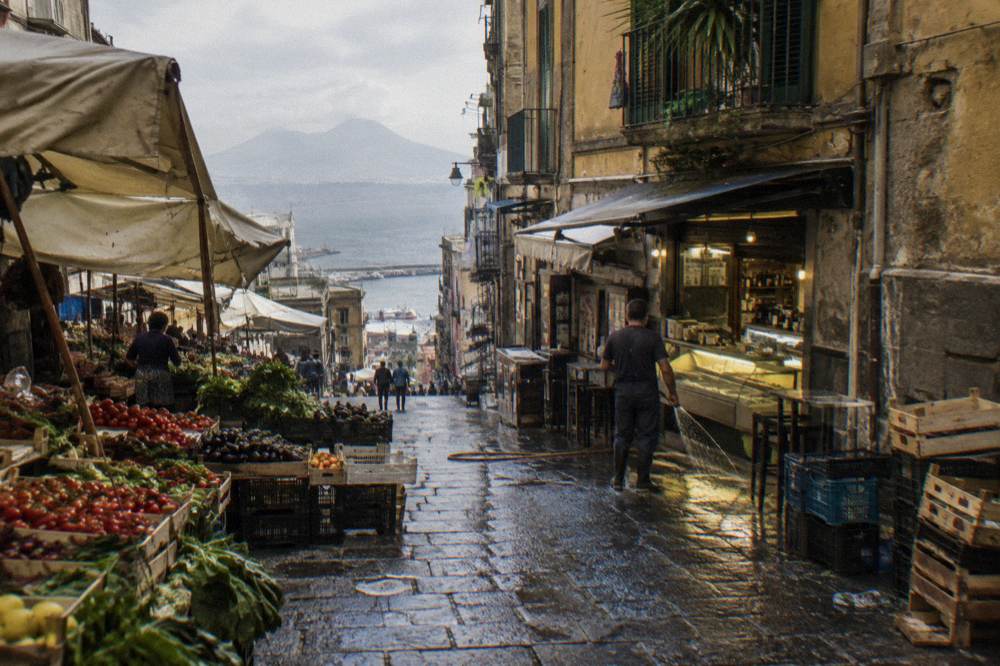
Yes, and the geometry is forgiving. Attanasio by the station, the Tribunali counters, and the Pignasecca market sit on a line walkable in under an hour without stops, so a coffee-and-pastry morning naturally becomes a street food morning. The Pignasecca market runs Monday to Saturday from roughly 7 or 8am to 2pm, with some stalls to 7pm, which sets the clock for the walk.
Start early because the market sets the rhythm. By mid-afternoon most Pignasecca stalls are closing, while the pastry shops and friggitorie along Tribunali run later, Di Matteo's counter toward midnight. A realistic shape: espresso and sfogliatella at Attanasio when it opens, a walk down through Port'Alba and Spaccanapoli, a frittatina mid-morning, then the market before it winds down. The whole route covers roughly the same historic-center ground as the street food walking tour with a local guide, which runs 2.5 to 3 hours from $47 per person with a local guide who handles the ordering.
If you would rather compare formats first, the street food and wine tour of downtown pairs the same neighborhood stops with local wine over 2.5 hours from $50 per person, and the six-stop Pignasecca market tour compresses the market experience into 2 hours from $47 per person. All three are walking tours with no pickup, so your own morning walk and a guided one can share the same map. More context on choosing between them sits in the comparison of private versus group formats elsewhere on Naples Food Tours.
Do Coffee And Pastry Rules Change With The Seasons?
The pastries do not, but the rhythm does. Sfogliatelle and babà are year-round staples at the same reported prices, the market keeps its Monday-to-Saturday morning schedule, and the main seasonal shift is volume: summer brings the caffè shakerato and the seaside crowds, while winter pushes locals back inside the bars. Booking pressure applies to guided walks, not bar counters, which need no reservation.
The one planning rule that survives every season: eat the sfogliatella hot. Shops that bake through the day will hold a tray for two minutes, and a riccia that has sat an hour loses the crackle that justifies the walk. Coffee follows its own calendar lightly, the shakerato appearing when the heat does, the morning cappuccino rule holding all year. None of this needs a tour to execute, but a guided walk compresses the learning curve, and the etiquette questions around sitting, ordering and paying are exactly what a local guide answers on the spot. For table manners at the pizza end of the day, the folding-and-fork debate is settled in How Do You Properly Eat A Napoli Pizza?.
| Stop | Known for | Hours (reported) | Order |
|---|---|---|---|
| Attanasio, Vico Ferrovia | Hot sfogliatelle | Tue-Sun ~6:30am-7:30pm, Mon closed | Sfogliatella riccia, espresso |
| Scaturchio, Piazza San Domenico | Babà and pastries | Daily, daytime hours | Babà al rum |
| Di Matteo counter, Via dei Tribunali 94 | Portafoglio, frittatina | Daily ~9am-midnight | Pizza a portafoglio |
| Pignasecca market stalls | Produce, frying counters | Mon-Sat ~7/8am-2pm, some to 7pm | Cuoppo, taralli |
| Friggitoria Vomero | Cuoppo | Mon-Sat 10am-2:30pm, 4:30-9:30pm | Cuoppo napoletano |
How Does A Guided Tour Fit The Coffee Stops?
A guided street food walk folds the pastry counters into a route you would otherwise research street by street, and the guide orders in dialect at the busiest windows. The tour list here includes the 2.5 to 3 hour street food walk from $47 per person, rated 4.9 across 6,066 reviews, and the 2.5 hour downtown food and wine tour from $50, rated 4.8 across 2,884 reviews, both operator-led and on foot.
The argument for a guide on the coffee-and-pastry trail is speed, not access: the bars are public and cheap, and nothing stops you walking into Attanasio alone. What a guide adds is sequencing, the knowledge of which counter is hot at which hour, and the willingness to push a group through the breakfast crush. Solo travellers and short-stay visitors get the most from it; anyone in Naples for four days or more can build the same route from this page and the market hours above.
Every price sits on the live booking page. Bar coffee prices vary from counter to counter, so the espresso you take standing up costs whatever the bar charges, and the pastry figures above are reported ranges from published guides, not operator guarantees. Prices and ratings for each tour sit on the live booking page. Market days and shop hours follow what the shops themselves publish, so check both before you set out. The rest is the city, which does its own editing every morning.
Common Questions About Naples Coffee And Pastry
What should you order at a Naples coffee bar?
Order "un caffè" for a straight espresso, drunk standing at the counter. A macchiato adds a drop of milk. Cappuccino is a morning-only order by local custom, and sitting at a table often costs more than standing.
What is a sfogliatella and what does it cost?
It is a shell-shaped pastry filled with semolina, ricotta, candied fruit and cinnamon. The crisp ridged riccia runs EUR 2 to 2.50 and the soft short-crust frolla around EUR 1.50 to 2, and it is best eaten hot from the oven.
Where is the best sfogliatella in Naples?
Attanasio on Vico Ferrovia near Stazione Central is the most-cited benchmark, baking in waves Tuesday to Sunday and closed Mondays. Scaturchio near Piazza San Domenico Maggiore is the historic name for babà and the wider pastry case.
Can you visit the coffee and pastry stops on a tour?
Yes. The street food walking tours on this site run through the same historic-center streets, from $47 per person for 2 to 3 hours with a local guide who handles ordering at the busiest counters.
Is coffee expensive in Naples?
Standing espresso at the bar is one of the cheaper things in the city, though this page prints no exact coffee price because none was verifiable in the current sources. The pastry pairing is firmly budget: EUR 2 to 3 buys the sfogliatella or babà beside it.
What is a babà?
A small yeast cake soaked in rum, served wet and sometimes filled with cream. It runs EUR 2 to 3 at the classic pasticcerie and is Naples' answer to dessert at any hour.