What To Wear And Bring On A Naples Street Food Walk
Updated November 3, 2026
Practical clothing, footwear, rain and bag advice for a Naples street food walk, with tour operator guidance and packing rules for cobbles, heat and markets.
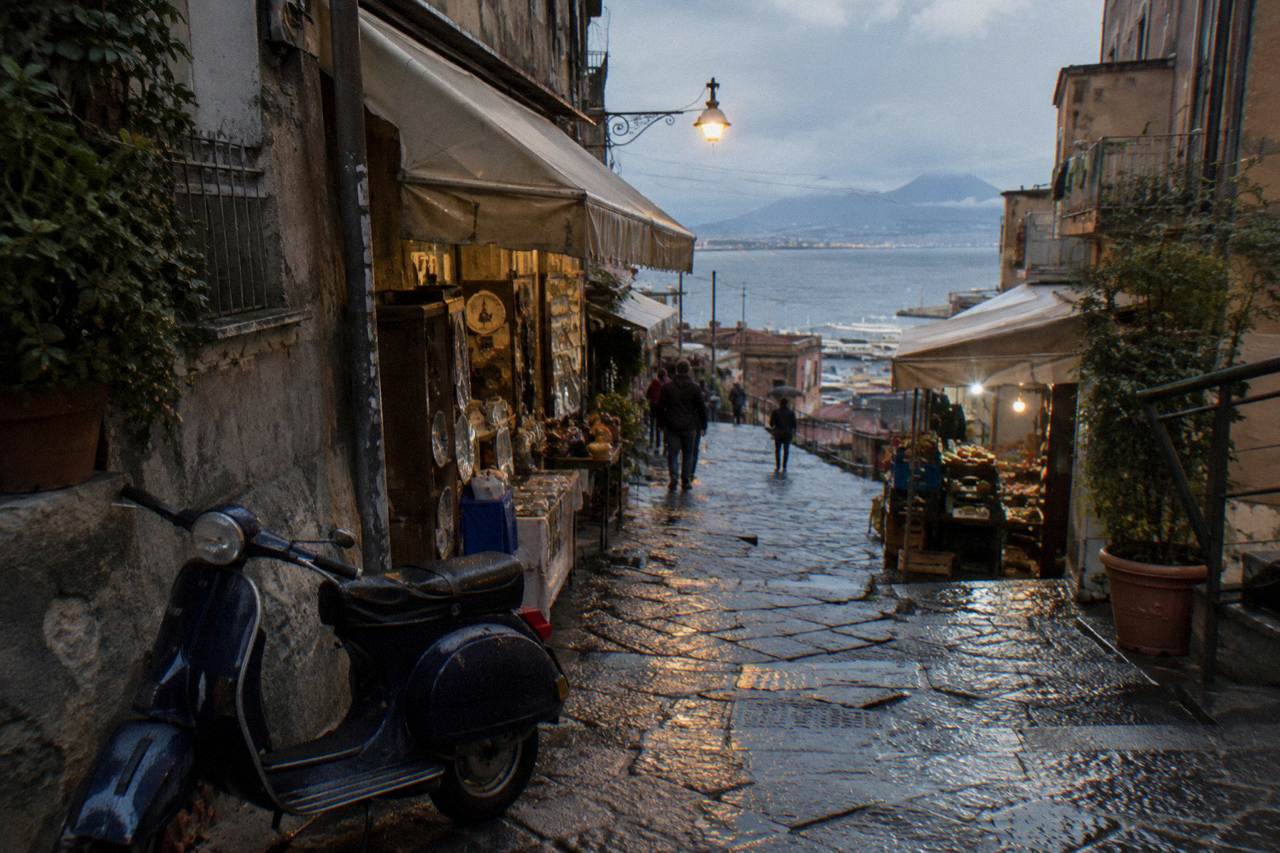
Worn basalt cobbles, sudden downpours, July heat that bounces off stone, and a bag you will set down at half the counters you visit: a Naples food walk makes practical demands that a beach itinerary does not. The kit that works is simple, and the operators who run these walks every day publish practical guidance worth matching your packing against. This page answers the shoe question, the rain question, the heat question and the bag question in order, with figures from the tour operators themselves.
What To Wear And Bring On A Naples Street Food Walk
For a Naples street food walk, wear closed, flat walking shoes with grip and carry a cross-body bag that zips shut. Add a packable rain layer if you are walking from October through March, and bring a water bottle from May through September. Those four pieces are what matter most. Everything else is preference. The walks cover real ground on real stone: operators report routes of 2 to 3 kilometers on cobbles and worn steps, and tours run 2 to 3.5 hours with almost no sitting. Operators do not enforce dress codes, but practical clothing is the difference between a relaxed circuit and a sore evening. Start with the full picture of Naples street food: every item, what it costs, then dress for the route that connects those counters.
The three tours most people compare for a first walk are below. All three are walking-only, with no pickup, so what you wear is what you walk in.
The street food walking tour with a local guide runs 2.5 to 3 hours from $47 per person, rated 4.9 across 6,066 reviews, and is the format most first-time visitors choose. The downtown street food and wine tour adds seated wine stops, from $50 per person, rated 4.8 across 2,884 reviews. The six-stop Pignasecca market tour is the shortest at 2 hours, from $47 per person, rated 4.8 across 721 reviews.
What Shoes Work On Naples Cobbles And Stairs?
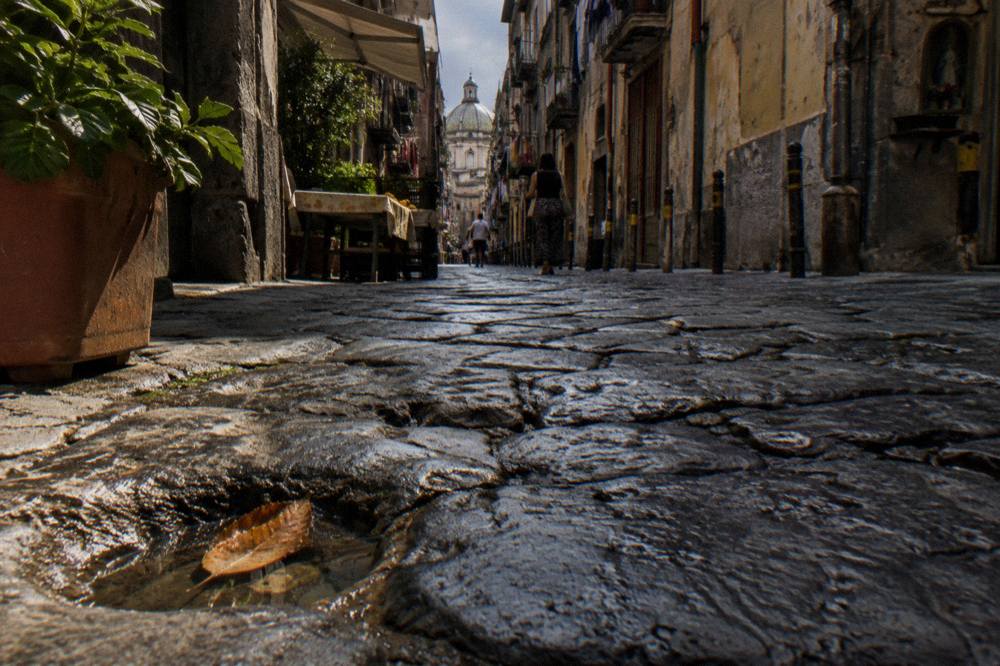
Flat, closed shoes with real tread. Sneakers or broken-in walking shoes are the standard answer; sandals, flip-flops, smooth leather soles and heels all fail on Naples basalt, which is polished by two centuries of foot traffic and slick when wet. Travelers report walking 2 to 3 kilometers on a typical food circuit, and the lanes around Via dei Tribunali and Spaccanapoli pitch up and down worn steps. Culinary Backstreets, whose five-hour Naples walk covers 2.5 kilometers from Porta Capuana to Sanità, publishes the distance openly on its tour page; shorter tours cover less ground but the same surface. A food walk is not a hike, but it is also not a mall.
| Walk | Distance reported by operator | Surface | Duration |
|---|---|---|---|
| Culinary Backstreets, Culinary Secrets of Backstreet Naples | 2.5 km | Cobbles and steps, Porta Capuana to Sanità | 5 h |
| Street Food Walking Tour with a Local Guide | Historic center circuit | Cobbles, worn stone lanes | 2.5 to 3 h |
| Pignasecca 6-Stop Street Food Tour | Market and lanes | Cobbles, market crowds | 2 h |
If you buy one thing for this trip, buy grip. A sole with patterned tread handles wet basalt; a flat fashion sole does not. Second: socks you can walk in for three hours. Third, if you visit between November and March, shoes that can take a puddle at a crossing without soaking through.
What Happens If It Rains During The Walk?
If it rains during the walk, tours generally continue as scheduled; only lightning or genuinely severe weather stops them. The operator makes that decision, so plan to attend anyway and pack a packable rain jacket or a compact umbrella rather than planning to skip. Naples rain is concentrated from October through February and often arrives in short, heavy bursts rather than all-day drizzle, which is why locals carry foldable umbrellas rather than waterproof coats. A light rain layer that packs into its own pouch fits a food walk better than a heavy coat, because indoor stops, friggitorie and market awnings give you cover between bursts.
Wet stone changes the shoe answer from the section above: the cobbles that are merely uneven in dry weather become slippery in rain, so the tread matters most on exactly the days you would rather not think about it. A cheap folding umbrella bought in Naples works fine, and buying one locally costs a few euros from street vendors who appear the moment the clouds open. Rain also pushes market crowds under awnings, so a small backpack you can pull to your chest in a crush is better than a wide shoulder bag. If you are routing your own day rather than joining a guide, the free self-guided food tour route lets you duck into a pasticceria whenever the sky decides.
Summer Heat: How Do You Dress For A Hot Food Walk?
Wear light, loose, breathable layers in light colors, and bring a hat, sunscreen, and a filled water bottle, since July and August walks pass through midday heat, the stone underfoot holds that warmth, and the fried-food stops add heat of their own, so dressing this way keeps you comfortable from the first tasting to the last. Tours run in the morning and evening slots partly for this reason: typical class and tour departures cluster around late morning and around 17:00 to 18:00, and evening departures near 20:00 exist because midday in high summer is punishing. Choose an evening or earliest-morning slot if your dates allow.
The practical dress rules are unglamorous. Light-colored cotton or linen shirts rather than dark synthetics. Shorts or loose trousers rather than tight jeans. A real hat with a brim, not a cap worn backwards. Sunscreen applied before the walk, because the lanes are narrow but the crossing points and market squares are open. Sandals stay tempting in July and the shoe section above still says no: hot stone, spilled fryer oil near friggitorie counters, and market puddles are all part of the same streets. Eating Europe, which runs Naples food tours with a maximum of 12 guests per group, publishes its operating details on its Naples page, and its groups move between shaded stops rather than standing in the open.
| Season | Typical condition | What to add to the kit |
|---|---|---|
| May to September | Heat, strong midday sun | Water bottle, hat, sunscreen, light layers |
| October and November | Mild days, first heavy rain | Packable rain layer, umbrella |
| December to February | Cool, wet, wind off the sea | Warm layer, rain jacket, shoes with tread |
| March and April | Changeable, showers possible | Layered clothing, compact umbrella |
How Do You Keep Your Bag And Belongings Safe?
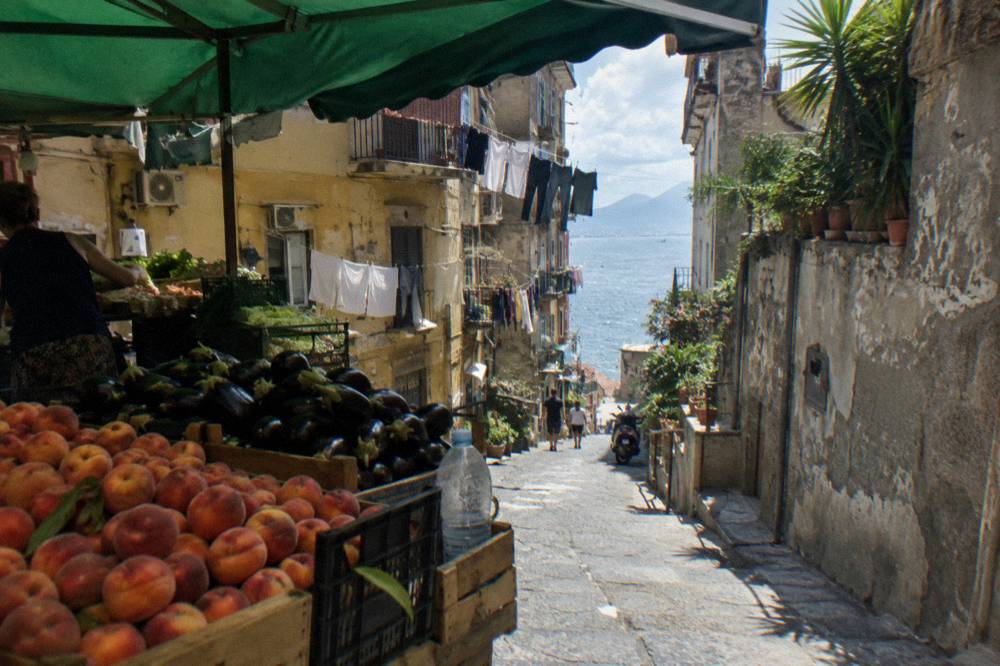
A cross-body bag worn in front, zipped, with nothing in outer pockets, is the standard: petty theft in the Naples center is mostly opportunistic pickpocketing in crowds, and a front-worn zip bag removes nearly all of the opportunity. Crowd pressure is the variable to plan around. The Pignasecca market runs Monday to Saturday, with most stalls from roughly 7 or 8:00 to 14:00 and some to 19:00, and at peak it is a dense moving crowd, exactly the conditions where a back-pocket phone or an open tote is at risk.
The rules travelers converge on are simple. Keep the bag in front of your body in markets and on funiculars. Carry only what you need for the walk: one card, some cash, your phone. Leave the passport in the hotel safe unless your plans require it. Do not set a phone on a counter while paying; hold it. These are the same habits any large European city rewards, and Naples is not an outlier here, it simply concentrates crowds into narrow lanes where the habits matter more. If your route centers on the market, the guide to La Pignasecca and how to shop it covers the layout, the stalls and the timing in detail.
What Should You Bring Beyond Clothes?
A filled water bottle, some cash in small notes for counters, a phone with an offline map, and one foldable bag for pastries you will inevitably buy: nothing more, because every extra kilogram rides on your shoulder for three hours. Counters move fast and a handful of small notes makes every transaction quicker. An offline map matters because the historic center lanes turn and fork, and even guided walkers like knowing where they are between stops. Tissues and hand wipes earn their place too: fried food is eaten by hand, and not every counter offers napkins generously.
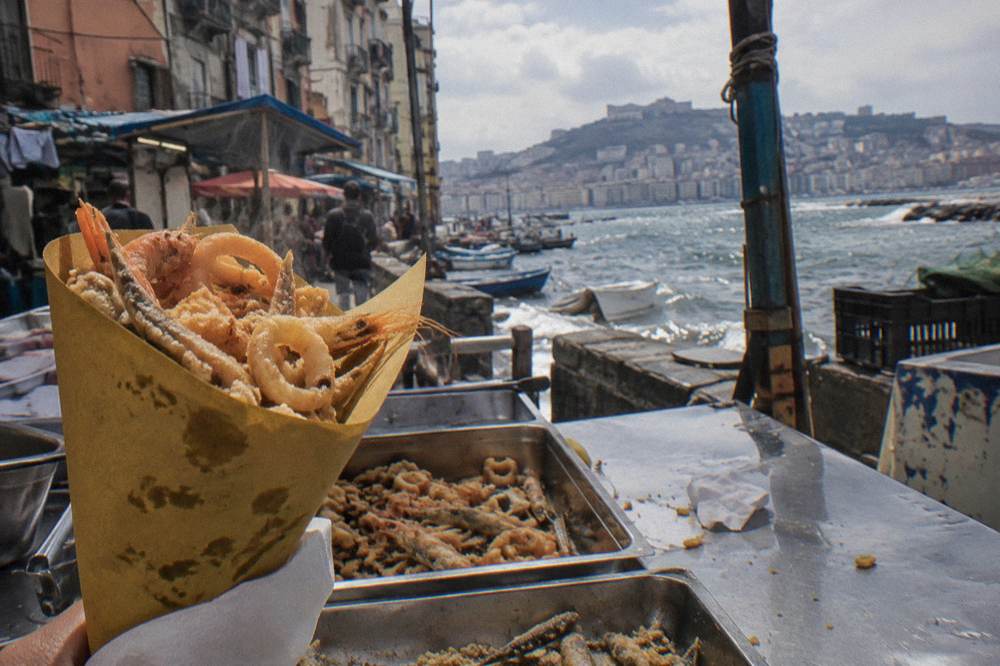
Dietary needs belong in your booking, not your pocket. Operators state that vegetarian is usually possible and that vegan and gluten-free options are limited, and they ask to be told at booking rather than at the first stop. Streaty, which runs Pignasecca and Quartieri Spagnoli walks of about 3 hours with groups capped at 10, covers dietary notes on its Naples tours page. The same planning logic applies to clothing and food combined: a full cuoppo and a slice of pizza fritta sit better with a little room in both your stomach and your waistband.
Common Questions About A Naples Street Food Walk
What To Wear And Bring On A Naples Street Food Walk?
Closed flat shoes with grip, a light breathable layer in summer or a packable rain jacket from October to March, a cross-body bag worn in front and zipped, water, small cash notes and an offline map. Tours cover 2 to 3 kilometers on cobbles over 2 to 3.5 hours, so dress for walking, not for dining.
Do Naples food tours run in the rain?
Generally yes. Operators run in rain and cancel only for severe weather, with the decision made by the operator. Bring a packable rain layer or a folding umbrella, both of which fit easily in a small day bag.
Are sandals acceptable on a food walk?
They are not recommended. The lanes are uneven basalt, slick when wet, and counters fry food at high heat nearby. Flat closed shoes with tread are the standard choice among both guides and regulars.
Should I carry cash on a Naples food walk?
Yes, some. Tour stops are pre-paid on a guided walk, but small notes help at independent counters, market stalls and if you break away to buy pastries or a second sfogliatella.
Is a backpack or a cross-body bag better?
A cross-body bag worn in front is the usual answer for the market and crowded lanes. If you prefer a backpack, choose a small one and pull it to your chest in the densest stretches.
Can dietary needs be handled on the walk?
Vegetarian is usually possible, while vegan and gluten-free options are limited; operators ask to be told at booking so stops can be adjusted in advance.
If the kit list is settled and the question left is which walk, the three formats compared at the top of this page cover the range: a local-guide circuit, a food-and-wine evening, and a short six-stop market route. Naples Food Tours keeps the full tour list, the prices and the current ratings in one place.